
A particle detector developed under Mexican leadership could become part of ALICE 3, the next-generation experiment expected to operate at CERN’s Large Hadron Collider beginning in 2036. If the project moves forward, it would mark the first time Mexico has led the construction of one of the international project’s central scientific subsystems.
The device, known as the Muon Identifier Detector, or MID, was designed to identify muons with high precision and study matter subjected to temperatures and densities similar to those that existed immediately after the Big Bang.
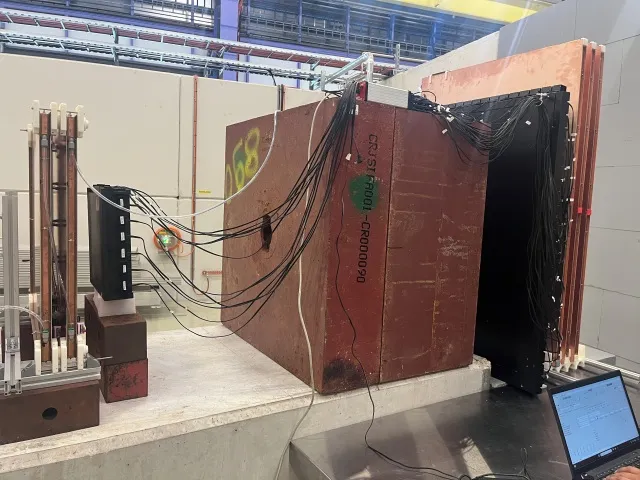
MID is already part of the ALICE 3 reference design, but its installation is not yet guaranteed. The project must complete its development, construction and funding stages before it can be incorporated into the future experiment, according to information from CERN’s ALICE Collaboration and the National Autonomous University of Mexico.
The initiative is led by Antonio Ortiz Velásquez, a researcher with the High Energy Physics Department at UNAM’s Institute of Nuclear Sciences. The ALICE Collaboration Board approved his appointment as MID project leader, making him the first Mexican scientist to direct the development of a strategic ALICE 3 subsystem.
The project involves researchers and students from UNAM, the Center for Research and Advanced Studies of the National Polytechnic Institute, the Benemérita Autonomous University of Puebla, the Autonomous University of Sinaloa and the National Technological Institute of Mexico. Institutions from the United States, Hungary, the Czech Republic and Pakistan are also collaborating.
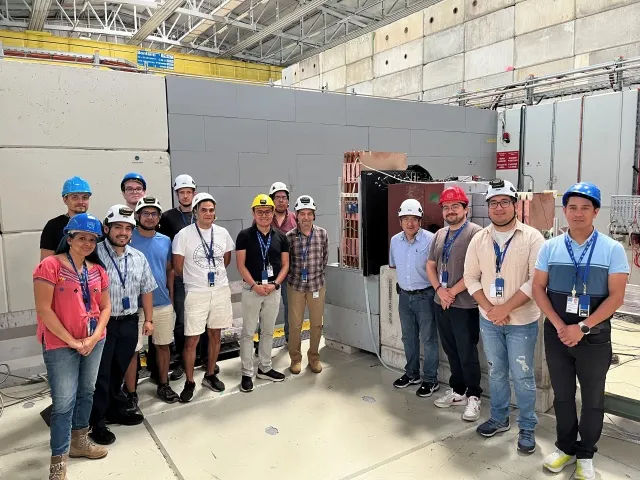
ALICE is one of the four major experiments at the Large Hadron Collider and specializes in heavy-ion collisions. These collisions, conducted at speeds close to the speed of light, produce quark-gluon plasma, an extremely hot and dense state of matter believed to have existed during the earliest moments of the universe.
“We are recreating tiny droplets of the early universe,” Ortiz Velásquez explained in an interview published by La Jornada.
The muons that MID is expected to identify can travel through different layers of the experiment while retaining information about the processes that produced them. Their analysis will make it possible to study the evolution of quark-gluon plasma, the formation of particles containing heavy quarks and potential exotic hadrons, such as tetraquarks and pentaquarks.
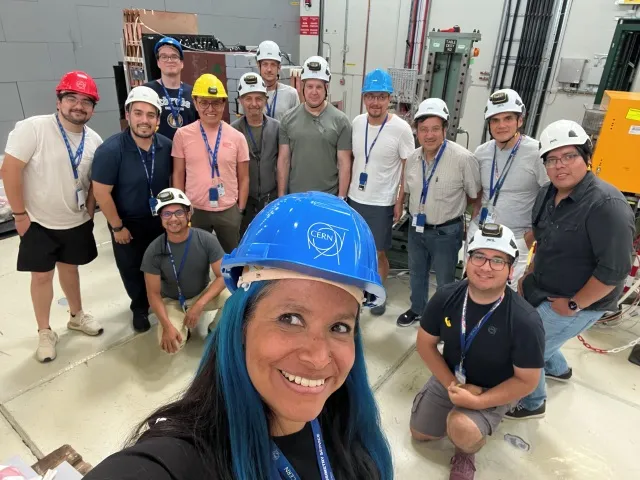
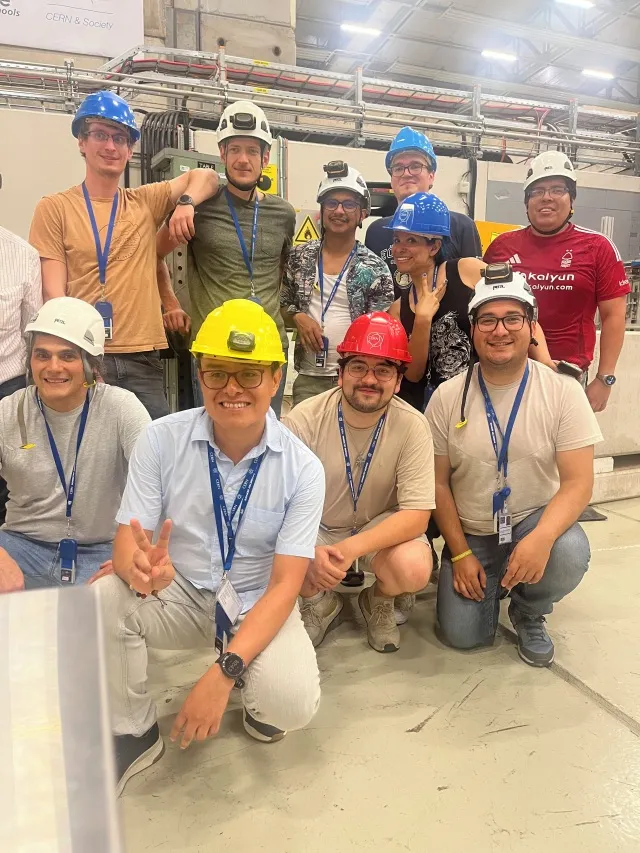
The proposed technology uses scintillator bars that produce light signals when a particle passes through them. That light is carried through optical fibers to silicon photomultipliers, while machine-learning algorithms help distinguish muons from other particles.
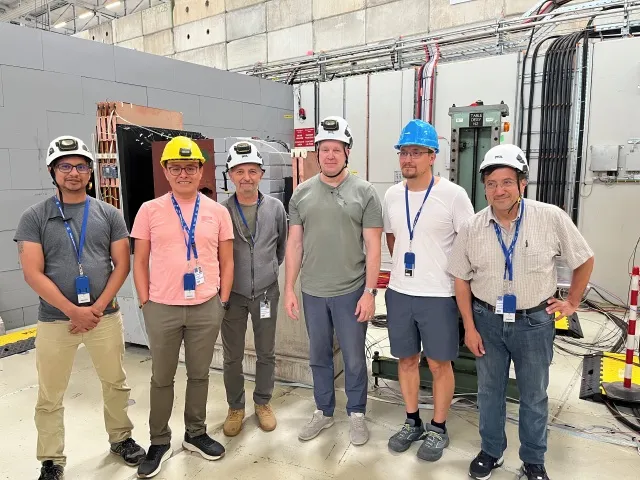
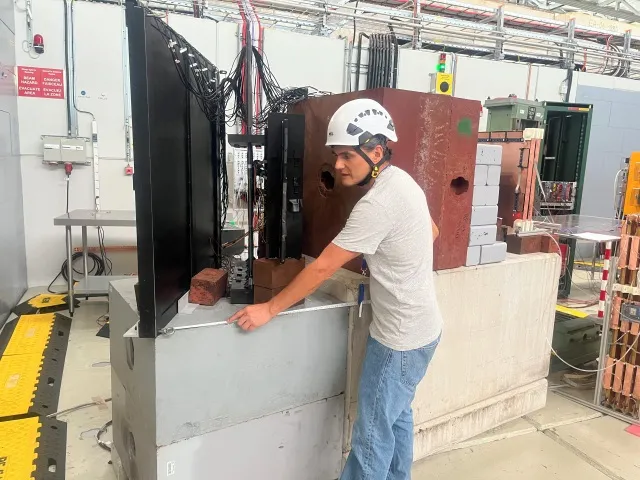
Tests conducted since 2023 at CERN’s T10 beam line have included large prototypes positioned behind an iron absorber. The goal is to achieve greater than 95 percent efficiency in muon identification while keeping background signals at low levels.
The Mexican team proposes building as many as 10,000 readout channels, a considerably greater capacity than that of devices previously constructed in the country. It also seeks to reduce production costs without sacrificing stability or scientific performance.
Construction of the first chambers is scheduled to begin in Mexico in 2028 and conclude around 2032, while operations are projected to start in 2036, when ALICE 3 would begin taking advantage of the Large Hadron Collider’s high-luminosity phase.
The timeline, however, will depend on the financial support the project can secure, particularly from Mexico’s Ministry of Science, Humanities, Technology and Innovation. While that funding is being secured, the participating teams continue to build and evaluate prototypes.
In addition to its contribution to particle physics, the initiative will help train Mexican specialists in electronics, scientific instrumentation, artificial intelligence, materials science and large-scale data analysis—fields necessary for developing, in Mexico, components intended for one of the world’s most complex scientific experiments.
Related: Mexico Advances Sustainable Solutions to Confront the Water Crisis in the Sierra de Guadalupe