
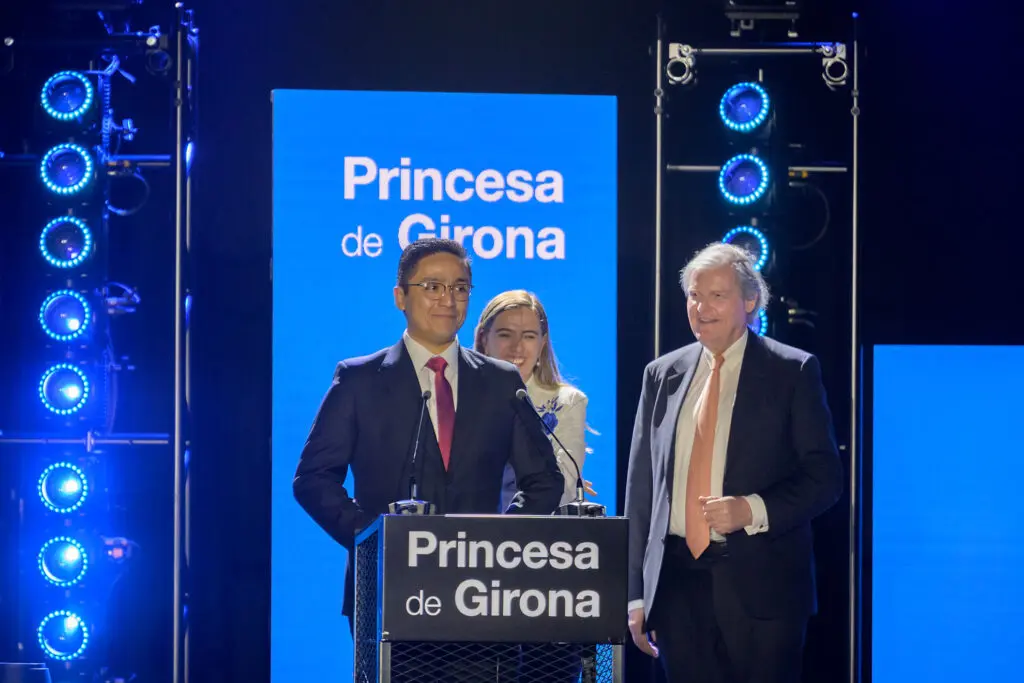
Mexican astrophysicist José Eduardo Méndez Delgado was proclaimed the winner of the Princess of Girona International Award 2026 in the Research category, a recognition that places him among the most outstanding young scientists worldwide and confirms Mexico’s presence in cutting-edge science.
Originally from Morelia, Michoacán, Méndez Delgado built his path in astronomy at the National Autonomous University of Mexico (UNAM), where he began as a research assistant and started exploring one of the most complex topics in the universe, the chemistry of nebulae.
His trajectory later took him to Spain, where he pursued graduate studies at the University of La Laguna and obtained his PhD at the Institute of Astrophysics of the Canary Islands with cum laude honors.
The award, announced at an event presided over by King Felipe VI in Alcalá de Henares, recognizes researchers under 35 with high potential for innovation and international projection. The award ceremony will take place on July 14 at the Gran Teatre del Liceu in Barcelona.
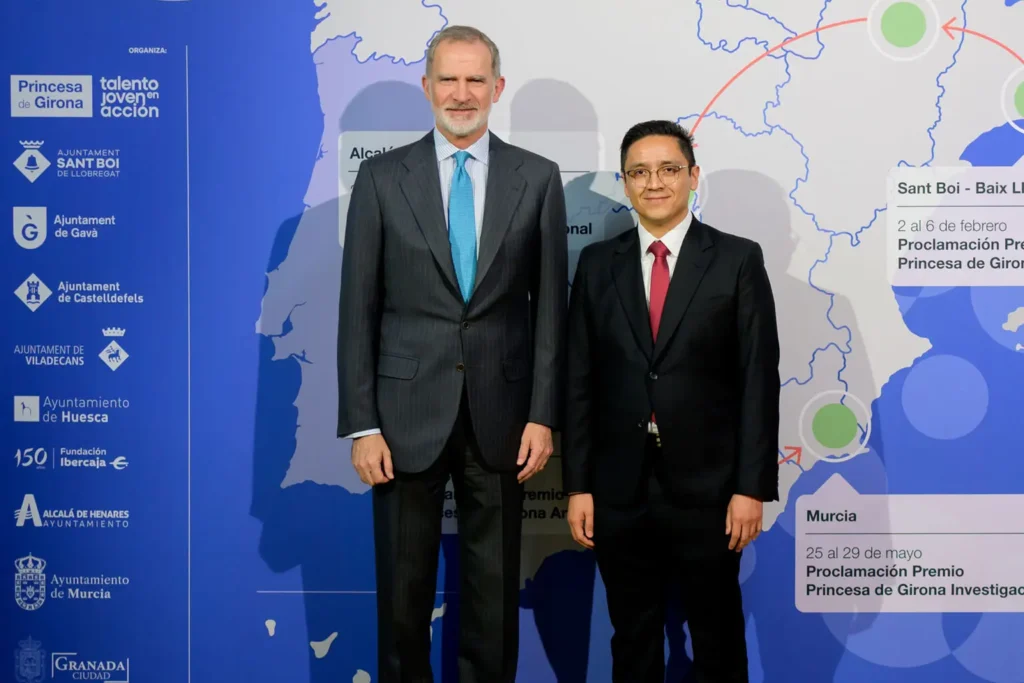
From the Institute of Astronomy at UNAM, the scientist has focused his work on the study of ionized nebulae, key regions for understanding how galaxies form and evolve.
“At UNAM we are not a minor league, we are contributing to human knowledge on a global scale, we are at the frontier of science,” Mendez Delgado explained, underscoring the international scope of his research.
His approach is based on a powerful idea: reading the chemical composition of the universe as if it were an archaeological record. Through this methodology, his team can reconstruct the history of galaxies by identifying how many stars have been born and died in different regions of the cosmos.
To achieve this, they use high-precision telescopes that capture the light emitted by nebulae. By analyzing it, they identify the elements present in the gas, as well as its temperature, density, and composition, information that allows them to decipher fundamental processes of the universe.
“The calcium in our bones or the oxygen we breathe are elements that were formed in some star… by studying the universe we also uncover our own origin,” the astrophysicist explained.
During his international training, Méndez Delgado worked with some of the most advanced instruments in the world, such as the Very Large Telescope, the Gran Telescopio Canarias, and the Hubble Space Telescope, with which he obtained unprecedented data on the formation and destruction of dust in nebulae and possible indications of planetary formation.
Among his most important contributions is the creation of the international DESIRED project, a database that has made it possible to address long-standing problems in astrophysics, such as the discrepancy in the measurement of chemical abundances in ionized regions, a problem that has persisted for more than eight decades.
Mendez Delgado’s research has been published in high-impact journals such as Nature and Nature Astronomy, and has been recognized with international awards such as the Ernst Patzer 2024 from the Max Planck Institute for Astronomy.
Currently, the Mexican scientist leads global projects from UNAM such as the SDSS-V Local Volume Mapper consortium and the After Sloan 5 program, focused on the spectroscopic mapping of the nearby universe.
The recognition not only distinguishes an individual trajectory, but also projects Mexico onto the international scientific stage. In a highly competitive field, Méndez Delgado’s story reflects how talent trained in the country can contribute to answering some of the deepest questions about the origin and evolution of the universe.
Related: Rivera Garza: The Mexican Voice That Could Bring the Nobel Back to Latin America