
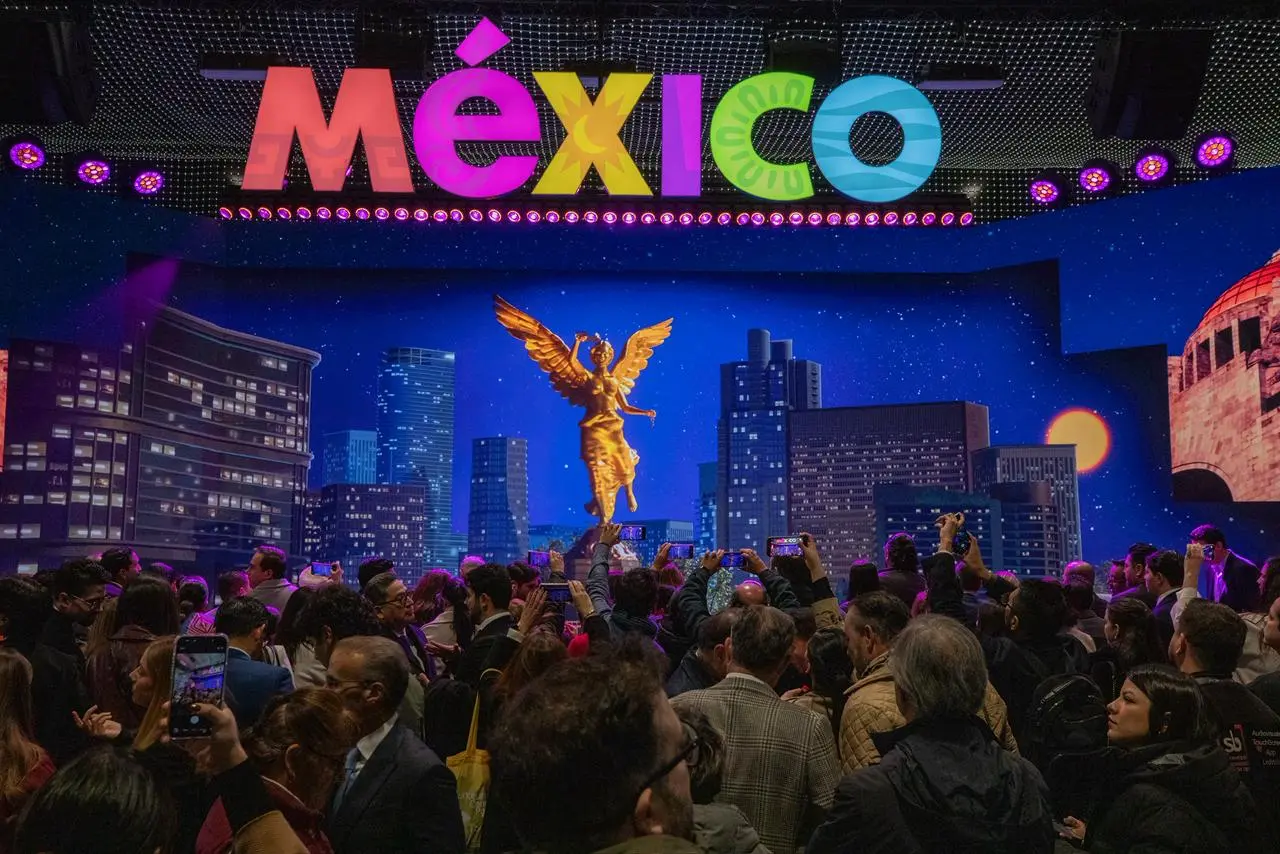
Mexico concluded its participation as Guest Country at the 46th edition of the Feria Internacional de Turismo (FITUR) 2026 in Madrid, Spain, with record-breaking results that reinforced its position as a leading global tourism power.
Mexico’s Minister of Tourism, Josefina Rodríguez Zamora, reported that the country presented the largest and most visited pavilion in the Americas, spanning 1,800 square meters, with the unprecedented participation of all 32 Mexican states and more than 1,500 exhibitors—marking the most significant presence Mexico has ever had at the fair.
“Mexico arrived at FITUR 2026 with one voice and a clear objective: to position ourselves as a global tourism powerhouse. Today, we close this edition with historic results and a future full of opportunities for the country,” she said.
She emphasized that FITUR 2026 marked a turning point in Mexico’s international tourism projection, registering more than 155,000 professional visitors during the first three days alone and consolidating the event as a strategic platform for promotion, connectivity, investment, and cultural diplomacy.
Held from January 21 to 25 at IFEMA Madrid, Mexico’s participation brought together a delegation of more than 800 representatives, including federal and state authorities, business leaders, and tourism stakeholders, highlighting the unity and strength of the country’s tourism sector.
On air connectivity, Rodríguez Zamora underscored key announcements to expand links between Mexico and Europe. These include new Aeroméxico routes such as Mexico City–Barcelona with six weekly frequencies, Monterrey–Paris with three weekly frequencies, and a total of 71 weekly flights to Europe.
Iberia announced new routes, Monterrey–Madrid and Guadalajara–Madrid, while Iberojet confirmed operations on the Querétaro–Madrid route. Additionally, talks are underway between Air Europa and Guanajuato to explore a potential new connection.
Mexico also advanced its investment agenda through participation in financial forums organized by BBVA and Santander, as well as strategic meetings with hotel groups such as Inverotel. Wyndham Hotels & Resorts announced it will conduct a study to evaluate the development of up to 25 new hotels in Mexico, further strengthening investor confidence in the country’s tourism sector.
Beyond the fairgrounds, Mexico achieved unprecedented visibility across Madrid. For the first time, a Wixárika artwork was displayed at Puerta del Sol: El Oso y el Madroño, a reinterpretation of Madrid’s iconic symbol, which attracted an estimated 20,000 visitors per day over five days and generated more than 150,000 in-person interactions, alongside millions of potential social media impressions.
Mexican states carried out more than 100 activations inside and outside IFEMA, positioning Mexico as a major cultural and tourism presence throughout the city during FITUR.
At the institutional level, Rodríguez Zamora held high-level meetings with Spain’s Minister of Industry and Tourism, Jordi Hereu, and with UN Tourism Secretary-General Shaikha Nasser Al Nowais.
These meetings advanced a strategic agenda focused on community-based tourism, international cooperation, and strengthening Mexico’s role in executive decision-making spaces for Latin America.
Additional promotional initiatives included agreements with FlixBus to showcase Mexican destinations across European bus routes, advertising campaigns in emblematic Madrid Metro stations, and the installation of Ventana México, a space coordinated with Fonart for the exhibition and sale of Mexican handicrafts, reinforcing the country’s cultural and economic diplomacy.
During FITUR 2026, Mexico also assumed the Pro Tempore Presidency of the Mundo Maya Organization for the 2026–2028 period. The regional body—comprising Belize, El Salvador, Guatemala, Honduras, and Mexico—aims to promote tourism development through a shared vision that highlights the Maya region’s cultural, historical, and natural heritage.
Rodríguez Zamora highlighted the strong presence of Mexico’s Indigenous peoples throughout the fair, noting that their participation in the inauguration and cultural activities elevated community-based tourism as a strategic pillar of the country’s national tourism policy.
“Mexico’s participation at FITUR 2026 has strengthened its image as a global tourism destination, demonstrating the solidity of its tourism offering, the unity of the sector, and the significant growth and collaboration opportunities ahead in 2026—a key year for the consolidation of Mexico’s tourism industry,” she concluded.
Related: Mexico Makes a Strong Statement at FITUR 2026 with the Largest Tourism Showcase in Its History