Mexican photographer wins World Press Photo 2026 with a climate-focused perspective

Mexican photographer César Rodríguez was recognized at the World Press Photo 2026 for his project “Mexico, a Changing Climate,” a series that documents with visual strength and sensitivity the impact of climate change on communities across the country.
Originally from Tepic, Nayarit, Rodríguez developed a photographic essay over a four-year period that portrays floods, droughts, water scarcity, and the displacement of entire populations, showing that the climate crisis in Mexico is not a future threat, but a reality already transforming daily life.
One of the most representative images shows a man standing on the remains of a breakwater in Sánchez Magallanes, Tabasco, where coastal erosion has consumed more than 500 meters of land since 2005, driven by increasingly intense storms.
Mexico faces high vulnerability to extreme climate events: 52 percent of its territory is located in arid or semi-arid zones, and in the past two decades nearly 2.7 million people have been internally displaced by environmental disasters, a figure that could reach 8 million by 2050.
In the Gulf of Mexico, sea levels are rising at a rate three times higher than the global average, causing the disappearance of entire communities such as El Bosque, in Tabasco, recognized as the first locality in Mexico officially displaced by climate change.
At the same time, regions in the industrial north and the center of the State of Mexico face a severe water crisis, with an 81 percent drop in renewable water availability since 1950. In cities like Monterrey, the rotation between extreme heat waves and floods has turned water into a scarce resource, in some cases even guarded by security forces.
The World Press Photo jury noted that Rodríguez’s work offers “a local and informed perspective” on these phenomena, combining highly aesthetic images with a narrative that reveals the relationship between environmental pressures, political decisions, and infrastructure shortcomings.
His lens focuses on fishing communities and vulnerable urban populations, where climate change not only transforms the environment, but also social dynamics, customs, and collective memory.
With a career marked by publications in international outlets such as Time Magazine, National Geographic, The New York Times, and El País Semanal, Rodríguez has built a body of work focused on migration, human rights, and the environment, establishing himself as one of the most important visual voices of his generation.
The recognition at the World Press Photo 2026 not only distinguishes Rodriguez’s work, but also projects an urgent narrative globally: that of a Mexico already facing the effects of climate change, whose story is increasingly being told through images.
Related: Mexico Debuts at the Vatican’s ‘100 Presepi’ with a Rarámuri Nativity Scene from Chihuahua
More from Culture
All stories →
Mexico City cempasúchil harvest hits record 10 million plants before Day of the Dead
Mexico City growers produced a record 10 million cempasúchil plants for Day of the Dead, a 53.8% jump. See prices, where to buy and the Zócalo ofrenda.
Fresno father of four removed to Mexico 16 days after ICE arrest
Luis Arreguín lived 49 years in the US before ICE removed him to Mexico 16 days after his Fresno arrest, as deportees now land in Mexican border cities.
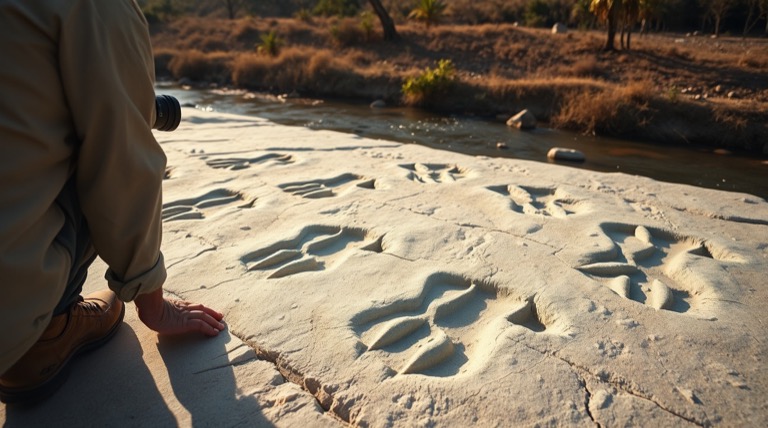
50 dinosaur footprints from 65 million years ago found in Michoacán
At least 50 fossilized dinosaur footprints have been identified in San Juan de los Plátanos, a community in the municipality of Apatzingán, in Michoacán, a state in western Mexico; the traces are approximately 65 million years old.