Guillermo Cortés conquers the world and rekindles hope for Mexican taekwondo

On the tatami in Tashkent, Uzbekistan, where silence weighs as much as the blows and every point is contested to the limit, a Mexican teenager held his gaze, measured the distance, and executed with precision. Guillermo Cortés, just 16 years old, became the junior taekwondo world champion and once again placed Mexico at the top of a discipline that is part of its sporting identity.
The scene was epic: in front of him stood South Korean Ji Woon Ha, representing South Korea, a historic powerhouse in this sport that not only invented modern taekwondo, but has also dominated it for decades. That is why Cortés’ victory in the under-59 kilogram category is not just a gold medal, it is a statement that Mexico remains competitive among the world elite.
The triumph immediately resonated across the country; from the National Palace, President Claudia Sheinbaum devoted words that synthesize the significance of the achievement: “He is the pride of Mexico,” she said, highlighting the discipline and sacrifice required to reach that level at such a young age, with intense training sessions, school days, and a life marked by constancy.
Behind that gold lies a story that cannot be seen on the podium, since there are days that begin before dawn, hours of technical repetition, injuries, fatigue, and the pressure of competing while representing a country. Cortés, like many youth athletes, lives between two worlds: the classroom and high performance.
But his victory also speaks to a broader history, since taekwondo has, for more than two decades, been one of the pillars of Mexican sport. Since it was integrated into the Olympic program at the Sydney 2000 Games, Mexico found in the tatami a space of constant success. That first bronze medal by Víctor Estrada was the beginning of a tradition that grew over time.
In Athens 2004, siblings Óscar Salazar and Iridia Salazar confirmed the potential with silver and bronze, but the highest point came in Beijing 2008, when Guillermo Pérez and María del Rosario Espinoza won Olympic gold. Espinoza, moreover, would build one of the most complete careers in Mexican sport, adding bronze in London 2012 and silver in Rio 2016.
However, after that golden cycle, an uncomfortable pause arrived after Mexico failed to reach the taekwondo podium in Tokyo 2020 and Paris 2024. A 12-year drought that raised alarms in a discipline accustomed to delivering results.
That is why the name Guillermo Cortés takes on a different dimension. He is not just a junior champion: he is a sign of renewal, a reminder that talent continues to emerge and that generational change is underway.
The Mexican performance in Uzbekistan reinforces that reading. That same day, young Darah Ponce also climbed the podium with a silver medal in the under-44 kilogram category, adding strength to a delegation that had been close to the podium in previous days.
Beyond the numbers, what is being built is a narrative: that of a new generation growing up with clear role models, but also with the pressure of returning Mexico to the Olympic elite. The Los Angeles 2028 Games already appear on the horizon as an opportunity to close the drought cycle. In that context, Cortés not only won a final, he opened up a possibility.
More from Culture
All stories →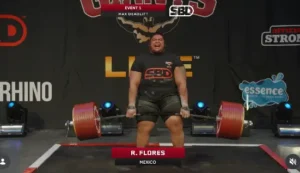
Raúl 'Tayzon' Flores Takes Mexico to the Top as the World’s Strongest Man in the Deadlift
Raúl Abraham “Tayzon” Flores Castro took Mexico to the top of strength sports by lifting 511 kilograms—approximately 1,127 pounds—winning the World Deadlift Championship and setting the heaviest mark in the history of the discipline.
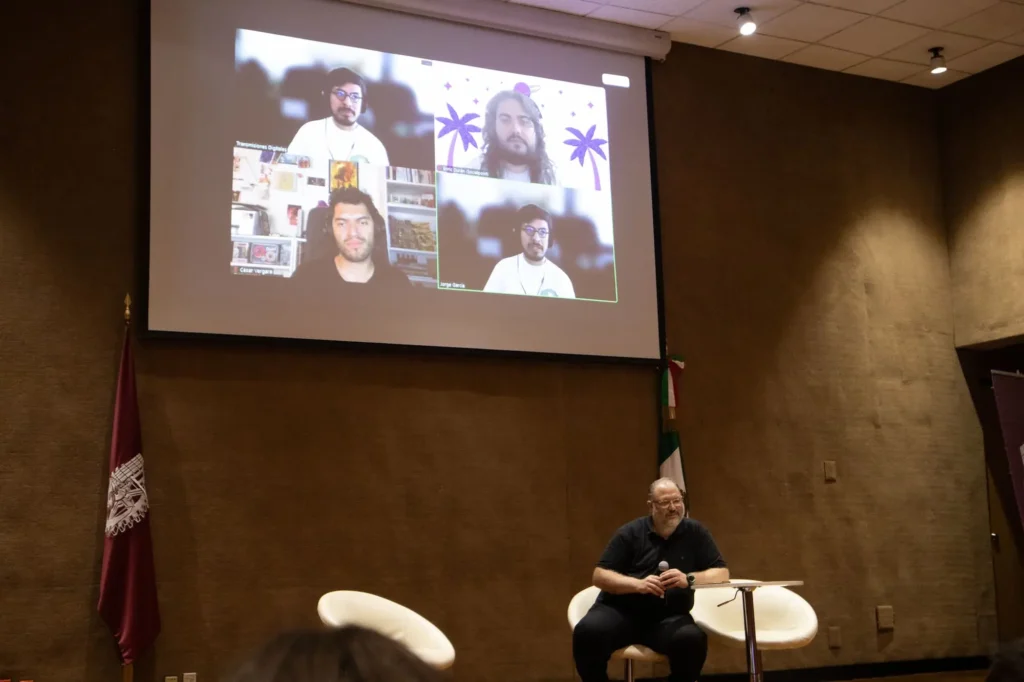
Mexico celebrates the 4th International Meeting of Video Game Researchers
North of Mexico City, the fourth meeting of video game researchers took place, which is part of the Digital Games Research Association (DIGRA) which in Mexico has been called DIGRA Mx.

Karim López Makes History as the First Mexican Selected in the First Round of the NBA Draft
Mexican basketball scored an unprecedented advance on Tuesday night when Karim López became the first player born in the country to be selected in the first round of the NBA Draft.