
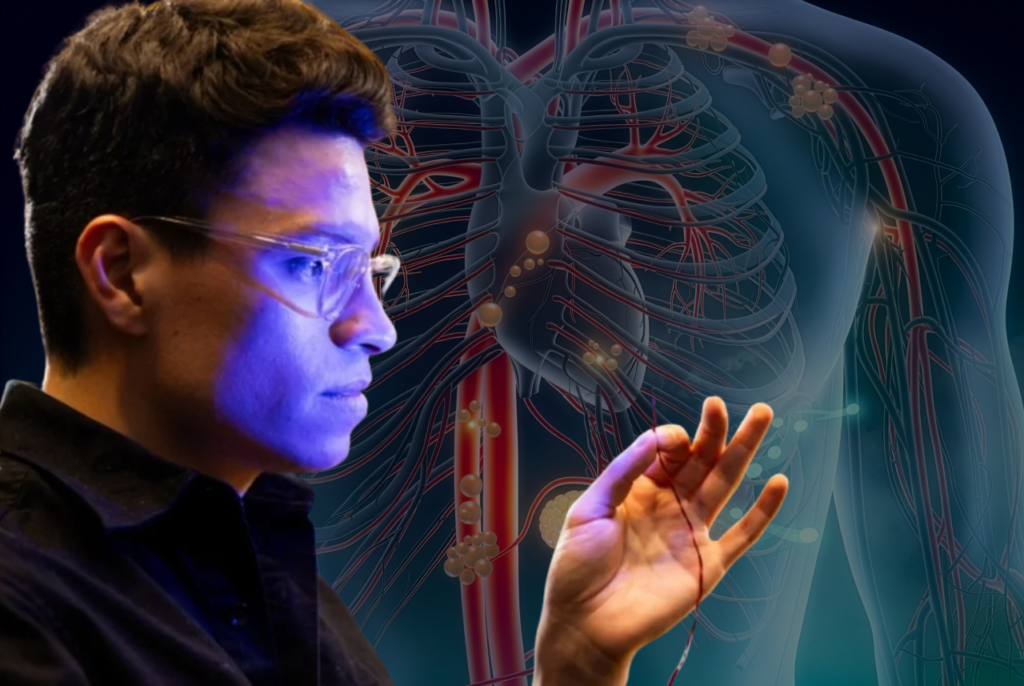
In the laboratories of the Massachusetts Institute of Technology (MIT), where science often anticipates the future, a young Mexican is working on an idea that until recently seemed exclusive to science fiction: “living” implants capable of restoring movement and lost functions to the human body.
He is Guillermo Herrera-Arcos, co-author of a study published in the scientific journal Nature, which presents a breakthrough in the development of myoneural actuators (MNA), biological devices designed to integrate into the body and restore function in weakened or paralyzed organs.
The research, developed in collaboration with the MIT Media Lab, the K. Lisa Yang Center for Bionics, and the McGovern Institute for Brain Research, proposes a radical alternative to current solutions, which rely primarily on external mechanical or electronic devices.
“Today’s solutions are mostly synthetic: pacemakers and other mechanical assist devices. A living muscle actuator implanted alongside a weakened organ would be part of the body itself. That is a category of medicine different from anything seen in the clinic,” explained Herrera-Arcos, a graduate student in the MIT Biomechatronics research group.
At the core of this advancement is the ability to reprogram living muscle tissue to turn it into a computer-controlled “biological motor,” resistant to fatigue and capable of integrating with the nervous system. In practical terms, this could mean, in the future, restoring functions such as bladder emptying in patients with spinal cord injuries, or even bringing back sensations like hunger or touch.
The work is part of a broader line of research led by renowned scientist Hugh Herr, a pioneer in the development of advanced bionic prosthetics. Under this vision, the human body can not only be assisted by technology, but also expanded and regenerated through hybrid systems combining biology and electronics.
“Our research is on the brink of giving new life to various parts and extensions of the body. It’s exciting to think that our system could enhance human potential in ways that once belonged only to the realm of science fiction,” Herrera-Arcos said.
Although the development is still in early stages and far from immediate clinical application, the study represents a significant step toward a more integrated regenerative medicine, in which devices do not replace the body, but become part of it.
For Mexico, the presence of scientists like Herrera-Arcos in cutting-edge projects also underscores the growing role of national talent in global research. His work not only opens new medical possibilities, but places a young Mexican at the center of a scientific conversation seeking to redefine the boundaries between the human body and technology.
Related: IMSS Stem Cell Bank Ranks Among the Best in the World