The New York Times reports an adventurous visit to a fake fentanyl lab

This note is based on a Grecko’s social-network publication posted on Dec. 30th, 2024.
Reporters of The New York Times seem to have been misled to believe they were being taken to an illegal urban fentanyl laboratory, when to an not-overexperienced eye it would have been clear that the installations, equipment and most-basic cautionary measures by far did not match what is required to produce the drug and maintain the operators alive at the same time.
In the NYT’s piece, titled “ Inside a Sinaloa Cartel Fentanyl Lab in Mexico”, dated December 29th, 2024, journalists’ main claim that they “witnessed the dangerous fentanyl production process inside a secret lab in Culiacán run by Mexico’s most powerful criminal syndicate” is belied by photographs and their description of the setting and actions.
Fentanyl production involves extremely poisonous chemicals that can quickly kill a human being on light contact, inhalation or swallowing. It needs to be performed in open or very ventilated areas, with industrial-level personal protection equipment to keep all skin, hair, eyes, nose, and mouth safe and ensure all surfaces are hygienically and orderly maintained.
An experienced source consulted said that a person exposed to this process without proper gear would dramatically die in minutes.
Just the two first paragraphs of the Times’ story show how improbable it is that this was a fentanyl lab.
Reporters wrote that they had just walked in “when the cook poured a white powder into a stockpot full of liquid. He began mixing it with an immersion blender and fumes rose from the pot, filling the small kitchen”.
Journalists “wore gas masks and hazmat suits, but the cook had on only a surgical mask”. He and his partner were said to be preparing no small amount, but 10 kilograms of fentanyl. “While one sniff of the toxic chemicals could kill us, they explained, they had built up a tolerance to the lethal drug”.
So this statement was enough for the NYT representatives to accept that this was real fentanyl production, regardless that the makers should have been dying before their eyes.
It is noted that “the men said they risked deadly reprisals by talking to reporters, and spoke on the condition of anonymity”. But by these pictures they’d be easily recognized by anyone who knows them, as the so-called “laboratory” would be.
Video and photographs tell even more of their lack of professional skepticism and verification methods.
The “lab” appears to be an apartment kitchen, dirty and disorderly, with “one small window and a plastic floor fan for ventilation”, the piece reads. Operators are shown all but protected: arms, neck, and eyes are fully exposed; they wear normal clothing and use drugstore gloves and, over mouth and nose, just fabric masks.
Reporters even wrote that, as they arrived, they saw the light of a small explosion inside the “lab” caused by “a chemical reaction”, but didn’t seem to find it strange that no one was hurt or somehow affected.
Just as a folkish touch, photographs show two open beers. They wrote: “The countertop was dotted with half-empty Corona bottles and metal containers with chemicals”. A sign that all this was fake? Or just another funny Mexican way to die smiling?
More from Fact-checking
All stories →
Remittances Reach US$41.8 Billion and Keep Families Together
Mexicans living abroad sent home US$41.802 billion from January to August 2026, a 2.2% increase over the same period in 2025, according to Banco de México (Banxico). The figure confirms a recovery in a flow that…
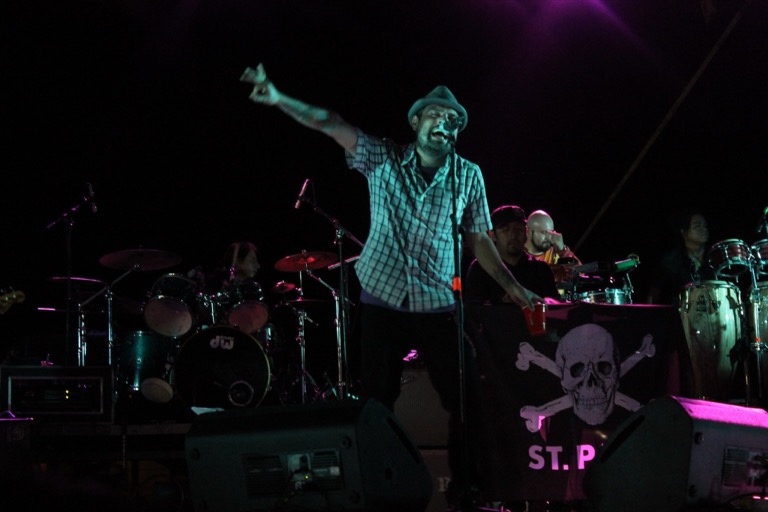
Tiny Desk Was Too Small for Panteón Rococó's Mexican Ska
American radio's most famous desk lacked the space to contain Panteón Rococó, as eleven musicians, brass, percussion, guitars, dancing and slogans turned NPR's small office into a celebration of Mexican ska, but also into a platform for talking about what Mexico cannot and must not forget.

San Antonio to Gather Voices for a Dialogue on Mexican American Identity
The stories, challenges and cultural expressions of those who build their identity between Mexico and the United States will be the focus of the II Con-ALMA 2026 Forum, a free gathering that will bring together this Saturday, October 3...