Tiny Desk Was Too Small for Panteón Rococó's Mexican Ska
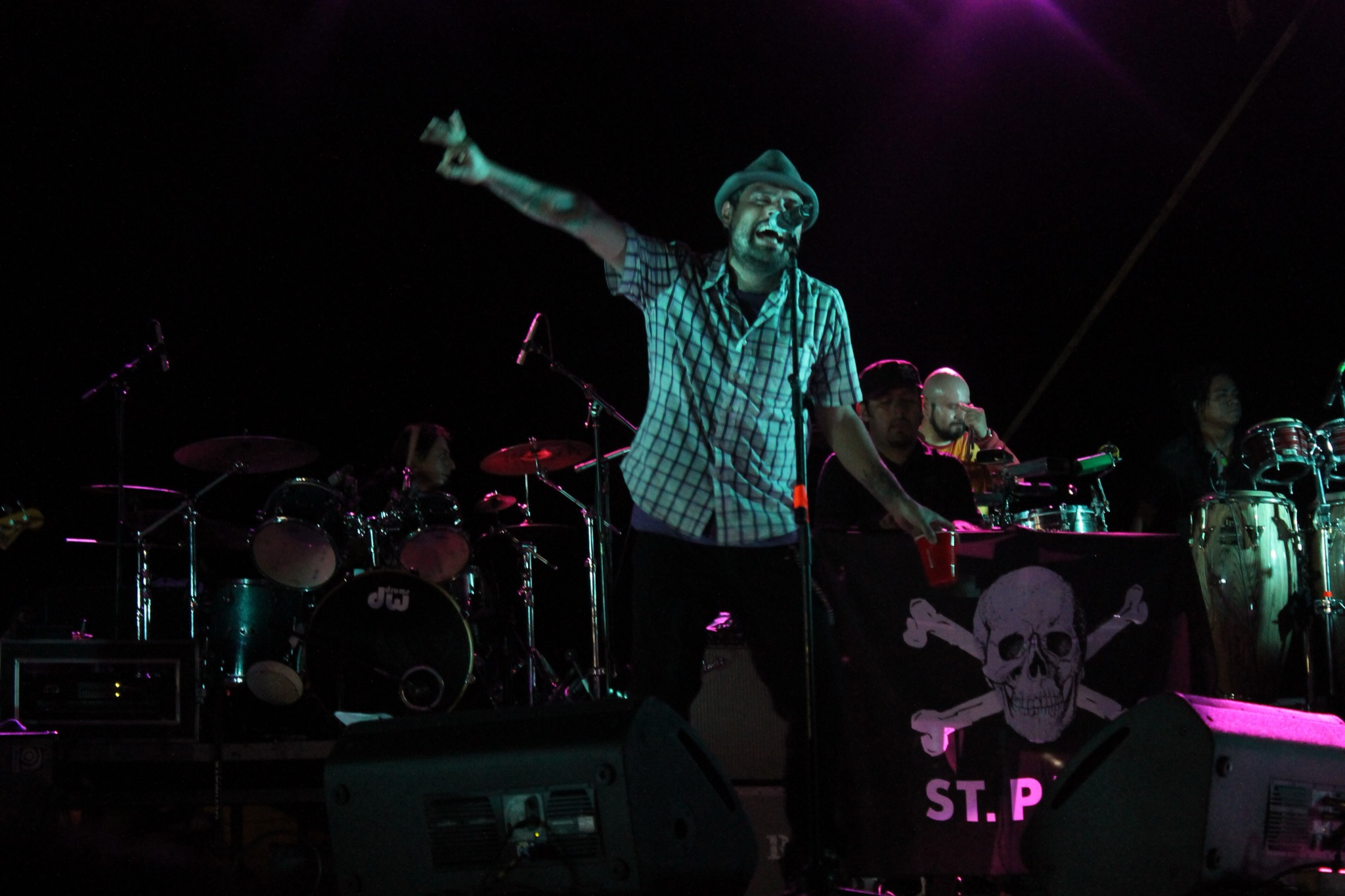
American radio's most famous desk lacked the space to contain Panteón Rococó, as eleven musicians, brass, percussion, guitars, dancing and slogans turned NPR's small office into a celebration of Mexican ska, but also into a platform for talking about what Mexico cannot and must not forget.
The session, released on October 1 as part of “El Tiny”, opened with “Arréglame el alma” and covered, in a little over 20 minutes, three decades of a music that learned to transform rage, deprivation and sadness into collective movement.
It was not a performance tamed for the American public, nor a comfortable postcard of Mexicanness, but Panteón Rococó doing what it has done since its earliest years: setting the body dancing while forcing the conscience to stay awake.
“We are very excited and very happy to be here, after playing together for 30 years and touring around the world,” said Luis Román Ibarra, Dr. Shenka, before announcing that the band had come representing Mexico City, “the great monster.”
Then came one of the most powerful moments of the session, when the vocalist dedicated “1993…” to the disappeared in Mexico and to the families still searching for them.
“For all our disappeared back in Mexico: I miss you, I am always looking for you. Someday we will meet again,” said Dr. Shenka into NPR's microphones.
Panteón Rococó then did something it knows well: placing a deep wound over a rhythm that pushes you to move, not to trivialize the pain, but to share it and turn individual hopelessness into a form of collective resistance.
“1993…” flowed musically into “Cha-Cha Love”, before giving way to “La dosis perfecta”, performed with a funk arrangement, and closing with “La carencia”, that portrait of insufficient wages, endless commutes and lives consumed by working hours that barely allow survival.
But the band did not speak only through its songs, for every garment seemed designed to say something at a moment when raising your voice can be uncomfortable, especially inside the United States.
Dr. Shenka wore the jersey of Chile's Club Deportivo Palestino, a garment linked internationally with solidarity toward the Palestinian people, while guitarist Leonel “Monelo” Rosales carried the phrase “No human being is illegal”.
Darío Espinosa wore an image of a dog urinating on an ice cube, a visual joke aimed at U.S. Immigration and Customs Enforcement, known by its English initials as ICE.
Rodrigo “Gorri” Bonilla appeared with the slogan “Make Fascists Afraid Again”, a direct response to Donald Trump's political slogan that can be translated as “Let's make fascists afraid again”.
These were not accessories chosen at random, nor gestures added to provoke a reaction on social media, but the continuity of a band born in Mexico City that for more than three decades has used ska, punk, cumbia and Afro-Caribbean rhythms to talk about inequality, migration, authoritarianism and resistance.
At the Tiny Desk, where closeness strips away much of the artifice of large stages, Panteón Rococó proved that the force of Mexican ska does not depend on a crowd or on enormous speakers, because it fits in an office and can still make the world vibrate.
Mexico was there without asking permission to be heard, with its brass, its political humor, its contradictions, its absences and that capacity so much our own to dance even when the song speaks of what hurts.
Panteón Rococó did not come to NPR merely to perform five songs, but to remind us that Mexican ska is also memory, protest and community, before signing off with a line from Dr. Shenka that summed up the spirit of the entire set: “Peace and resistance in the world forever”.
More from Culture
All stories →
Mexico celebrates the 4th International Meeting of Video Game Researchers
North of Mexico City, the fourth meeting of video game researchers took place, which is part of the Digital Games Research Association (DIGRA) which in Mexico has been called DIGRA Mx.

Karim López Makes History as the First Mexican Selected in the First Round of the NBA Draft
Mexican basketball scored an unprecedented advance on Tuesday night when Karim López became the first player born in the country to be selected in the first round of the NBA Draft.

Mexico Brings the Party the World Cup Never Knew It Needed
A duck wearing the Mexican national team jersey walks among thousands of people along Paseo de la Reforma avenue. His name is Merlin. He accompanies a family