Mexico Launches Comprehensive Plan to Strengthen Tourism Development in Tulum and Cancun

Mexico’s Ministry of Tourism (Sectur) announced a comprehensive strategy to boost tourism development in Tulum and Cancún, aimed at strengthening infrastructure, improving urban planning, and protecting natural areas across the state of Quintana Roo.
During a working tour through the region, Tourism Minister Josefina Rodríguez Zamora held meetings with state and municipal authorities, as well as representatives from the tourism and business sectors. The initiative is in line with President Claudia Sheinbaum Pardo’s directive to promote balanced and sustainable growth in Mexico’s leading travel destinations.
“In Tulum, we are moving forward with an integrated strategy that includes urban planning, improved tourism infrastructure, and environmental protection. The goal is to guarantee free access to the beaches and ensure that the destination’s development takes place sustainably, for the benefit of the community and its visitors,” Rodríguez Zamora said.
The Minister emphasized that the strategy involves the participation of more than 11 federal government divisions, as well as state and local governments, in a coordinated effort to address the challenges of tourism growth in Mexico’s Caribbean region.
The meetings brought together hoteliers, restaurant owners, tour guides, artisans, service providers, and members of the “Playas Libres” (Free Beaches) movement, who shared proposals to improve public beach access and visitor mobility.
Listening, engaging in dialogue, and building solutions together for the benefit of Quintana Roo is the foundation of this work, Rodriguez Zamora explained.
As part of the Cancún Travel Mart, she met with Governor Mara Lezama Espinosa and State Tourism Director Bernardo Cueto Riestra, along with members of the Business Coordinating Council (CCE) and the Hotel Association of Cancún, Puerto Morelos, and Isla Mujeres.
The federal Minister noted that maintaining an open and continuous dialogue with the business sector is essential to building joint policies that strengthen Mexico as a tourism powerhouse — listening to their ideas and concerns to foster orderly and sustainable growth.
In Tulum, Rodríguez Zamora led a follow-up meeting with local tourism representatives to monitor progress on agreements to improve visitor flow and ensure free access to public beaches.
She reported that beach access points have already been identified, and infrastructure work is underway to guarantee that both residents and national and international tourists can enjoy the coastline freely and responsibly.
She emphasized that wants Tulum to maintain its position as a key international destination linked to other nearly tourist attractions — but one that grows more fairly, more safely, and more sustainably.
During her visit, Rodríguez Zamora also presented details of Mexico’s tourism strategy for 2026, a historic year for the country as it co-hosts the FIFA World Cup with the United States and Canada.
She noted that Cancún will serve as a key hub during the event thanks to its world-class connectivity and hospitality infrastructure.
Rodríguez Zamora said that holding major international events will strengthen Mexico’s global tourism promotion and further consolidate Quintana Roo as a strategic destination for world tourism.
Related: Mexico’s Cultural Heritage Draws 14.6 Million Visitors in First 8 Months of 2025
More from Tourism
All stories →
Tlaxcala Prepares Firefly Season, One of Mexico’s Most Iconic Natural Spectacles
Thousands of tiny lights shining through the forests of Tlaxcala will light up again this summer as part of Firefly Season 2026.

Mexico City leads global friendliness ranking and tacos conquer street food
Mexico City added two new reasons for international pride after being ranked as the friendliest city in the world, while tacos topped the list of the most famous street food on the planet.
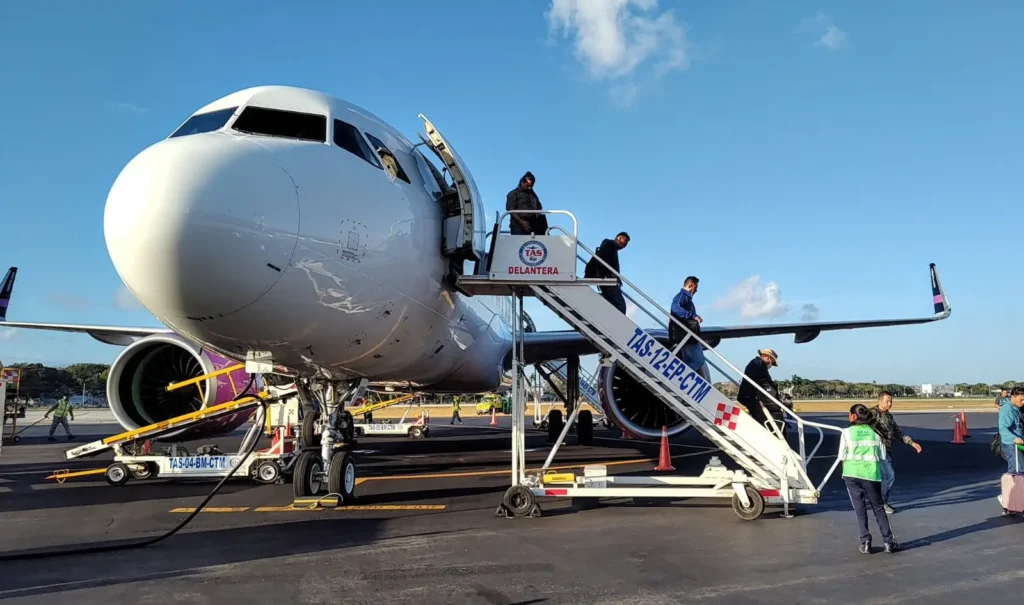
Mexico Air Travel Surpasses 122 Million Passengers in 2025
Mexico’s Minister of Tourism Josefina Rodríguez Zamora reported that the country’s regular air transportation system moved 122.4 million passengers in 2025, a 2.4% increase over 2024, underscoring the resilience and growth of Mexico’s tourism and aviation sectors.