Carlos Fuentes's novels still shape how Mexico reads its political history
Carlos Fuentes's novels still explain how power works in Mexico. A new Mexico News Daily essay revisits the literary map he left of the country's political history.

Mexican novelist Carlos Fuentes, who died in 2012 at 83, built a five-decade career on the premise that fiction can map what official history leaves out. A Mexico News Daily essay published Oct. 25, 2026, argues that his novels remain the clearest guide English-language readers have to how power works in Mexico.
Fuentes was born Nov. 11, 1928, in Panama City, the son of a Mexican diplomat, according to Britannica. His first novel, "Where the Air Is Clear," appeared in 1958, and "The Death of Artemio Cruz" followed in 1962. He wrote more than 70 books and won the Cervantes Prize in 1987, the BBC reported in its obituary.
That output placed Fuentes at the center of the Latin American Boom, the mid-century movement that carried Gabriel García Márquez, Mario Vargas Llosa and Octavio Paz to readers far beyond the region. His childhood followed his father's diplomatic postings through Montevideo, Rio de Janeiro and Washington, and the distance sharpened his sense of Mexico as a nation. Born abroad and trained in law at the National Autonomous University of Mexico (UNAM), he wrote in Spanish while reading across European and Latin American traditions, which helped his work cross into English-language classrooms. The concern was never nostalgia. Fuentes treated the country's public life as a set of private arrangements, and for Mexican American readers that approach explains how the two national stories kept writing over each other.
In "The Death of Artemio Cruz," a revolutionary soldier turned wealthy businessman reviews his compromises from his deathbed, a structure that ties private betrayal to national myth. "The Old Gringo," published in 1985, was adapted into a 1989 film starring Gregory Peck. He served as Mexico's ambassador to France from 1975 to 1977, a decision that drew both praise and criticism at home, according to Mexico News Daily. After his death, Mario Vargas Llosa said that "with him, we lose a writer whose work and whose presence left a deep imprint," the BBC reported.
The centennial of Fuentes's birth falls on Nov. 11, 2028, an anniversary that will return his novels to syllabi and reading lists on both sides of the border. The essay that prompted this reassessment is available in Mexico News Daily's culture section.
Sources: Carlos Fuentes, Mexican author · Carlos Fuentes · Mexican author Carlos Fuentes dies
This story was written with the help of artificial intelligence from verified sources and reviewed by a human editor before publication.
More from Culture
All stories →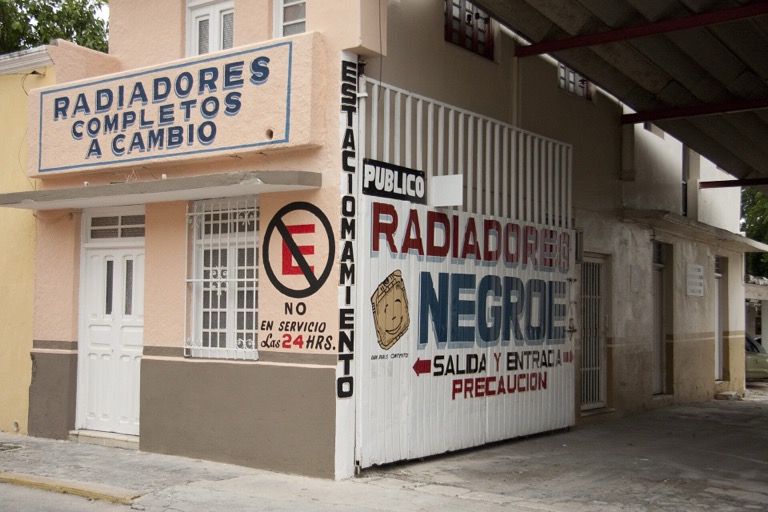
Mexico Beyond the Cliché
A cactus, a sombrero, a palette of bright colors. Each can carry cultural meaning. The problem begins when familiar symbols become the default vocabulary for representing an entire country.
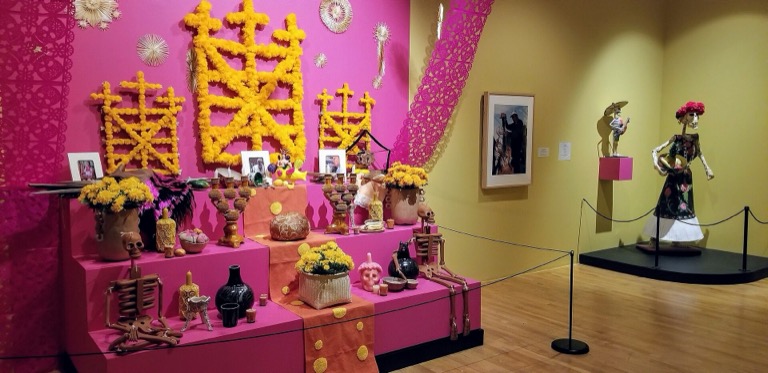
In Pilsen, a Chicago ballpark becomes a field of remembrance for Día de Muertos
The National Museum of Mexican Art marks its 40th annual Day of the Dead exhibition with Xicágo, an outdoor celebration this Saturday.
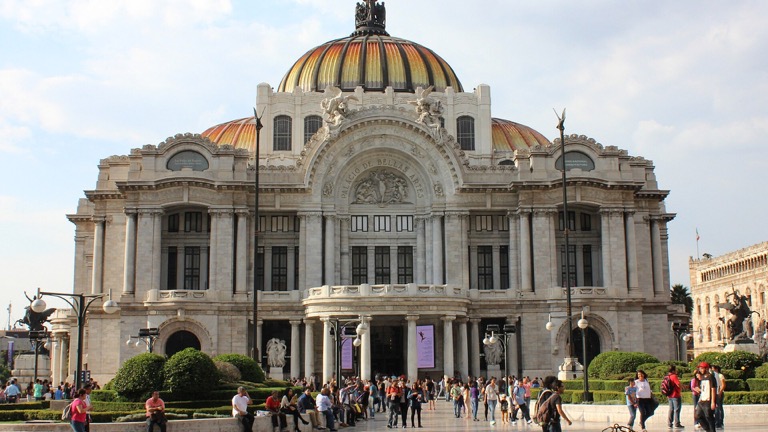
Palacio de Bellas Artes opens first major Kati Horna retrospective
The Palace of Fine Arts Museum opens the first major Kati Horna retrospective in Mexico City, with about 205 works tracing her exile and surrealist archive.