Arturo O’Farrill: A Mexico City Son Who Taught Jazz to Speak Spanish
Some musicians play in many languages. Arturo O’Farrill builds bridges between them. Born in Mexico City and raised in New York, the pianist, composer and bandleader has spent four decades proving that Latin American rhythm belongs at the very center of jazz
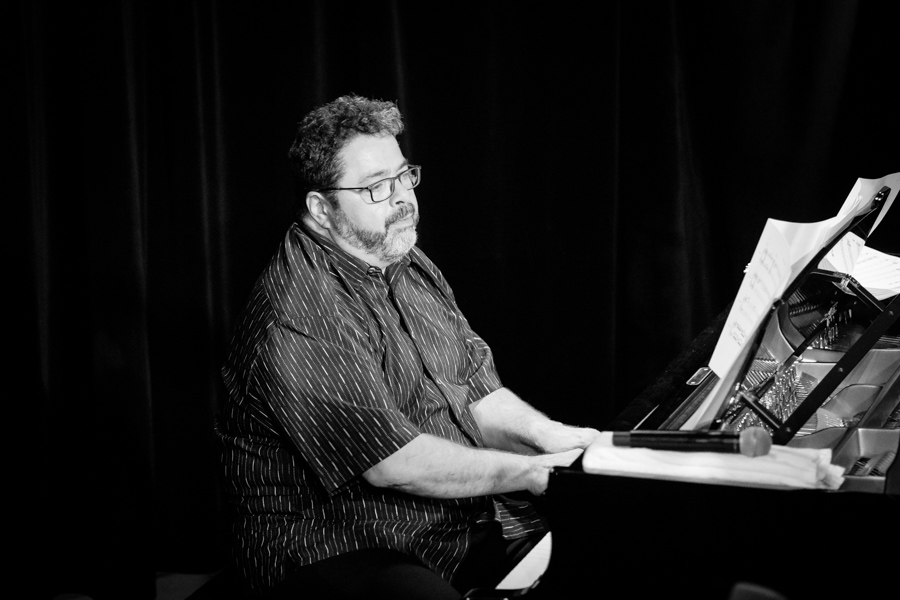
He is the son of Chico O’Farrill, the Cuban arranger who helped give birth to Afro-Cuban jazz. Arturo could have lived in that shadow. Instead, he carved his own path. He began his career in the 1980s with the Carla Bley Big Band and went on to perform with Dizzy Gillespie, Wynton Marsalis, Lester Bowie and Harry Belafonte.
In 1995 he became pianist and music director of his father’s orchestra, and after Chico’s death in 2001 he kept the flame alive. A year later he founded the Afro Latin Jazz Orchestra, which has filled Carnegie Hall, Lincoln Center and the Kennedy Center, and has held a weekly residency at Birdland since 2013. In 2007 he created the nonprofit now known as Belongó, which brings Afro Latin music to classrooms and communities. Its next chapter, Casa Belongó, is set to break ground in New York in 2026.
His catalog includes nearly 25 albums, and DownBeat has called him one of the greatest living pianists. He has written works commissioned by Jazz at Lincoln Center, the Apollo Theater and the Bronx Museum of the Arts, and composed for the Alvin Ailey and Evidence dance companies.
The awards followed the vision. O’Farrill is a six-time Grammy winner and a two-time Latin Grammy winner, with 17 nominations. His Afro Latin Jazz Suite earned him both a Grammy and a Latin Grammy, a rare double that confirmed his place among the most important voices in Latin jazz.
Mexico runs deep in his work. With Fandango at the Wall, he gathered musicians on both sides of the border fence between Tijuana and San Diego, weaving son jarocho, jazz and Afro-Cuban rhythms into one message: music has no walls. The project won a Grammy and became a symbol of unity.
Today he is a Distinguished Professor of Global Jazz Studies at UCLA, a Blue Note recording artist, a tireless mentor to young musicians and, in 2025, a double Grammy nominee for albums honoring Carla Bley and the birth of Latin jazz.
More from Culture
All stories →
Arizona joins Nevada's Colorado River lawsuit, with Mexico's water share at stake
Arizona joins Nevada's lawsuit over federal Colorado River cuts, while Mexico faces a 250,000 acre-foot reduction in 2027 and 2028 under another treaty.

Ballet Folklórico de México takes 75th-anniversary tour to 24 U.S. cities
The Ballet Folklórico de México marks 75 years with a 24-city U.S. tour opening Jan. 30, 2027, in Northridge, California, and closing in Austin, Texas.
Green card holders charged in California voter fraud case
Prosecutors charged 28 people, including green card holders from Mexico and Central America, with voter fraud in Los Angeles. A Nov. 9 hearing comes next.