Dolores Huerta, the Mexican American voice who turned "Sí, se puede" into a rallying cry
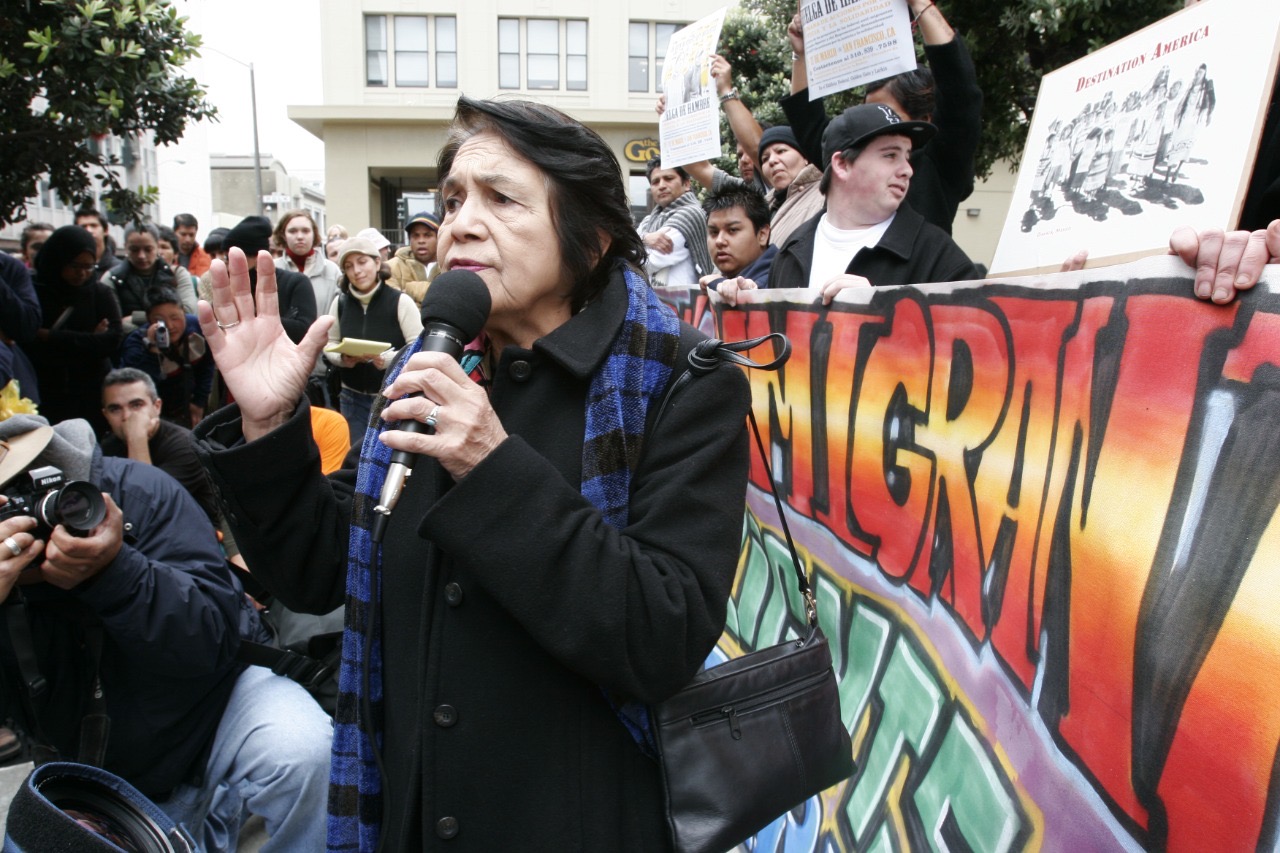
Dolores Huerta, the historic union organizer, civil rights advocate and co-founder of the United Farm Workers (UFW), died this Wednesday at 96. Her family announced the death in a message circulated through her foundation; while it is known that she died at home, the cause of death is not yet known.
Her story began in Dawson, New Mexico, and took root in Stockton, California. From a Mexican American family, she grew up among working communities of Mexicans, Filipinos, African Americans, Japanese and Chinese. Her mother, Alicia, was an enterprising woman active in community life; her father, Juan Fernández, worked as a miner and farm laborer and also took part in the union movement.
In that diverse landscape, Huerta learned that the struggle for dignity could take shape in the everyday organizing of neighbors.
At first she was a teacher, but seeing her students arrive at school hungry and without shoes led her to ask where she could do more.
So Huerta left the classroom and threw herself into organizing the farmworker families whose children she had taught, and in 1962, together with César Chávez and other activists, she founded the National Farm Workers Association, an organization that would later merge with the Filipino farmworkers' committee AWOC to form the United Farm Workers.
Huerta turned the struggle of the fields into a national cause and organized grape and lettuce boycotts, negotiated contracts and carried the workers' voice to legislators, consumers and major retail chains.
In 1972, during a campaign in Arizona, she answered those who said victory there was impossible with three words that would go on to travel the world: "Sí, se puede." The UFW adopted them as its slogan; decades later, Barack Obama picked them up in English, "Yes, we can," during his presidential campaign.
The slogan was no empty phrase, for through the work of Huerta and thousands of farmworkers, the union won collective contracts and better working conditions.
Her organizing and negotiating work also helped secure the passage of California's Agricultural Labor Relations Act of 1975, which recognized farmworkers' right to bargain collectively. Yet her activism came at a cost: she was arrested more than 25 times and, in 1988, suffered serious injuries when a police officer beat her during a protest in San Francisco.
Her struggle was never confined to the fields, and she defended the rights of women and migrants, drove voter registration and worked so that communities could organize and take part in the decisions affecting their lives.
In 2003 she founded the Dolores Huerta Foundation, dedicated to community organizing, civic participation and social justice, and in 2012 she received the Presidential Medal of Freedom, the highest civilian honor in the United States; she was also the first Latina inducted into the National Women's Hall of Fame.
In 2026, Huerta made public a painful part of her story by recounting that César Chávez, her fellow fighter and co-founder of the organization, had sexually pressured her on one occasion and forced himself on her against her will on another. She said she had kept silent for decades because she feared that revealing what happened would harm the movement to which she had devoted her life.
Her testimony added a personal and difficult dimension to the public history of a woman who helped build that struggle and who, at the end of her life, decided to also tell the cost she had borne in silence.
At 96, she was still raising her voice, and in an interview with CNN in August, she spoke out against the treatment of migrant communities and called for them to be defended. In parting, she returned to her slogan and called for working together to stop what she described as madness.
Dolores Huerta was born in the United States, into a family with Mexican roots, and turned that story, the story of workers who crossed borders, filled the harvests and were rarely heard, into a political force.
Her Mexican identity lived on in her defense of those communities, in her fight for justice and in a Spanish-language slogan that became the heritage of movements far beyond the fields of California. For those who once believed they could not change things, she left an answer that still summons: Sí, se puede.
More from Migration
All stories →
Migration crisis in Latin America and Caribbean: Int’l organizations request USD 763 million to strengthen integration and protection
Migration crisis in Latin America and Caribbean: Int’l organizations request USD 763 million to strengthen integration and protection
Mexican families denounce U.S. border killings
*With helplessness and pain reflected in their testimonies, they demand that the IACHR condemn the deaths.
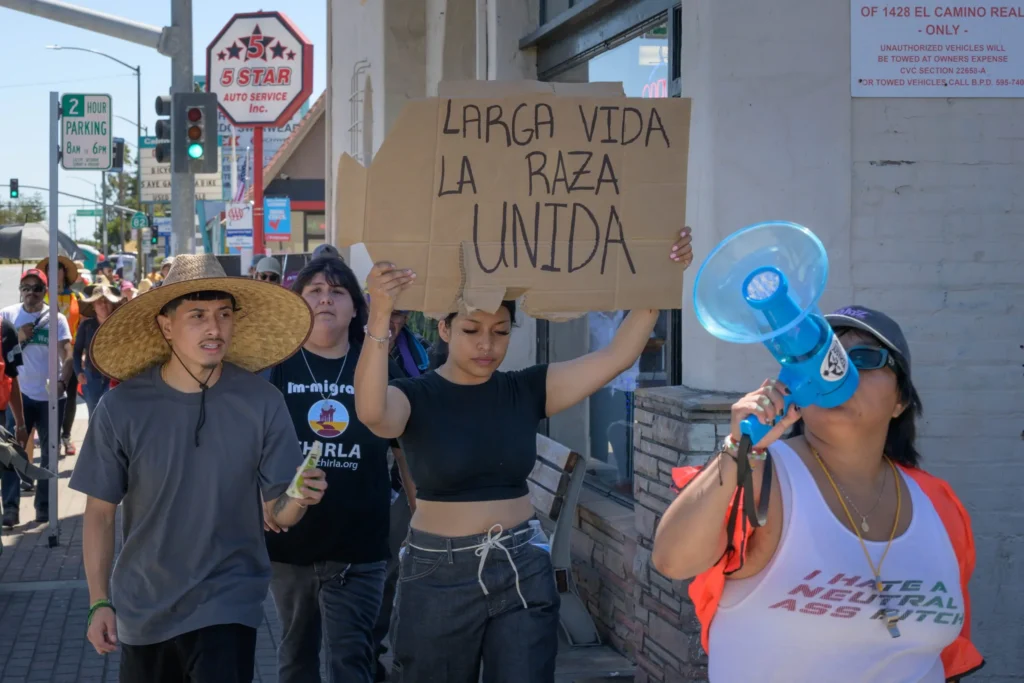
Latinos Reach Record High in U.S. Population and Workforce, UCLA Study Finds
For the first time in history, one in five residents in the United States is Latino, according to a new analysis from the UCLA Latino GDP Project and California Lutheran University (Cal Lutheran). Photo: Manuel Ortiz / MxPA