Mexican Scientist Isabel Barón Mendoza Wins US Fellowship to Study Touch and Autism
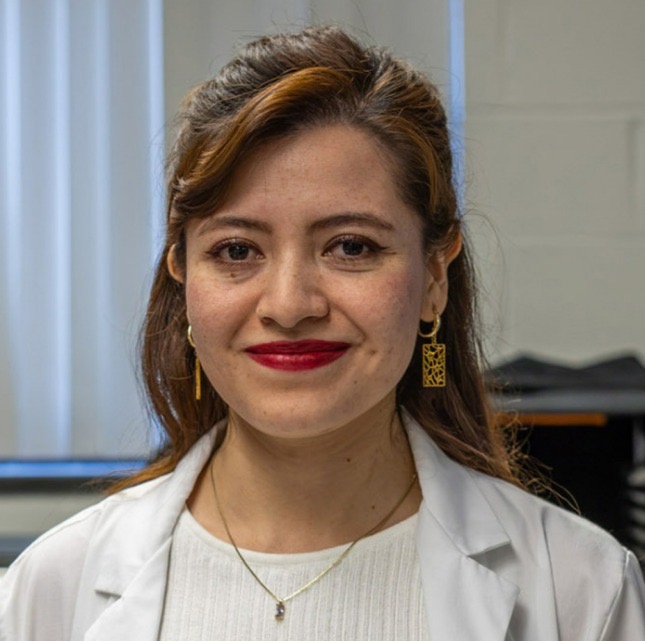
Mexican neuroscientist Isabel Barón Mendoza was selected as one of ten members of the 2026 cohort of the Pew Latin American Fellows program and is conducting her postdoctoral research at Rutgers University, where she studies how touch is processed in autistic people.
A brush of clothing, a pat on the back or an unexpected contact can feel overwhelming for some autistic people, but the mechanisms behind that sensitivity are not yet fully understood; Barón Mendoza seeks to provide answers through neuroscience.
Her research question extends the lens beyond the brain, because touch signals first pass through the spinal cord, where they are processed before reaching that organ; the scientist examines whether alterations in those circuits influence the tactile sensitivity associated with autism.
At the heart of her project are microglia, immune system cells that help organize neural circuits during development by pruning unnecessary connections; the researcher explores whether changes in that process alter the sensory pathways of mouse models.
To study this possibility, she works with cellular and molecular biology tools, spinal cord circuit mapping, three-dimensional imaging and behavior analysis supported by artificial intelligence; the goal is to link cellular changes with observable responses to touch.
The research is at a basic and experimental stage, so it does not represent an available treatment or an immediate solution; it seeks to understand biological mechanisms that in the future could guide new studies on tactile hypersensitivity.
Barón Mendoza has stressed that the purpose is not to change who autistic people are, but to understand sensory experiences that can be painful, stressful or limiting in specific situations; that perspective places people's wellbeing at the center of the scientific question.
Before arriving at Rutgers, the researcher built her career in Mexico and completed doctoral studies in Biomedical Sciences at the National Autonomous University of Mexico; there she took part in research on neuronal changes in animal models of autism.
In a paper published in 2021, of which she was first author, Barón Mendoza and her colleagues studied the number and shape of dendritic spines, small structures that receive signals between neurons, in the hippocampus and prefrontal cortex of C58/J mice, used as an experimental model; the team found differences in certain features of those connections.
That earlier work and her current project share a broad question about how neural circuits develop and function, although they investigate different processes and use animal models; laboratory results do not by themselves describe the experience of all autistic people.
The Pew program selected ten postdoctoral researchers from seven Latin American countries to carry out two years of studies in US laboratories under the mentorship of recognized scientists; Barón Mendoza represents Mexico in this cohort and works in the laboratory of Victoria Abraira, a specialist in sensory circuits.
As part of the support, Rutgers announced that she will receive an annual stipend of 30 thousand dollars for two years to back her research and professional development; Pew also offers additional funding to those who decide to return to Latin America to establish their own laboratories.
More from Health
All stories →
IMSS Stem Cell Bank Ranks Among the Best in the World
Since the creation of the IMSS Stem Cell Bank in 2005, it has treated hemato-oncological diseases, earning international certification.

Youth Mental Health Emerges as a Priority Amid Rising Violence and Emotional Crises
As the world marks World Mental Health Day on October 10, international organizations and Mexican authorities are warning about the growing emotional vulnerability of youth mental health.
Mexican Scientists at IPN Develop Innovative Rapid Test to Diagnose Childhood Leukemia
Mexico’s Instituto Politécnico Nacional —National Polytechnic Institute (IPN)— is advancing in the development of a rapid test to detect childhood leukemia.