Sheinbaum Closes APEC with a "New Era" of Cooperation with China and Trade Progress with Trump
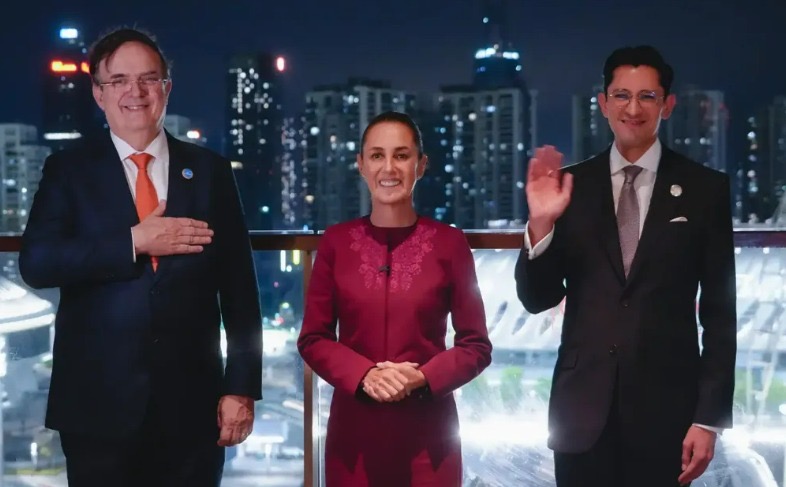
President Claudia Sheinbaum wrapped up her participation in the APEC summit in Shenzhen with cooperation agreements with China, progress in trade talks with Donald Trump, and meetings aimed at strengthening Mexico's ties with other Asia-Pacific countries. Presenting the results of the trip, she called it "very productive and very successful for Mexico."
With Chinese President Xi Jinping, Sheinbaum agreed to expand cooperation in science and technology, agriculture, clean energy, water resources, health, culture and tourism, and said the visit "marks a new era in the relationship with China." Both governments reaffirmed their interest in strengthening the Comprehensive Strategic Partnership.
The Mexican delegation reported memorandums of understanding on environmental, energy, scientific and international cooperation matters. The agreements include collaboration on climate change, the circular economy, waste treatment, renewable energy, and the exchange of students and researchers.
On energy, the memorandum provides for technical cooperation to develop thermosolar and geothermal power generation projects, thermal and battery storage, and smart transmission grids. On the scientific front, an exchange of young researchers for 12-month periods was agreed, and the creation of a binational mathematics center is under exploration.
Environmental cooperation includes river cleanup, solid waste management and biodiversity conservation. Secretary Alicia Bárcena said Mexico seeks to learn from Chinese experience in water treatment and to explore a pilot plant that converts waste into energy.
On health, Sheinbaum clarified that a memorandum has not yet been signed, although both countries agreed to exchange knowledge and medical personnel and to study the application of technologies used in smart hospitals. On tourism, Mexico proposed that 2027 be a year of bilateral tourism promotion and announced both countries' participation in trade fairs and sector activities.
The president also held meetings with the leaders of Canada, Australia, Singapore and Vietnam, as well as encounters with the presidents of Peru and Chile. She said the talks were "very constructive" and that Mexico invited the leaders to visit the country.
The Foreign Ministry reported that with Singapore the aim is to strengthen economic connectivity with Southeast Asia, while the meetings with Australia and Vietnam focused on bringing the countries closer together and boosting trade.
With Canadian Prime Minister Mark Carney, Sheinbaum reviewed the Mexico-Canada Action Plan 2025-2028, which comprises 32 actions on prosperity, mobility, security and sustainability. The two governments agreed to broaden its scope and to analyze new maritime routes to diversify trade.
In the meeting with Trump, the president described the encounter as "very cordial" and said there was progress in talks on non-tariff barriers and on tariffs for vehicles, steel and aluminum. Both agreed to meet again at Mar-a-Lago with the expectation of reaching, "if possible," an agreement between Mexico and the United States.
Sheinbaum noted that trade talks continue and that her government hopes to move toward a more definitive agreement in December. She also maintained that the USMCA remains in force and that Mexico is holding bilateral talks with the United States and Canada on Section 232 tariffs.
The president said the trip allowed Mexico to engage with several governments in the region and to present Plan Mexico to international business leaders. The country will host APEC in 2028, an event Sheinbaum aims to use to build on the outreach and cooperation projects launched in Shenzhen.
More from Politics
All stories →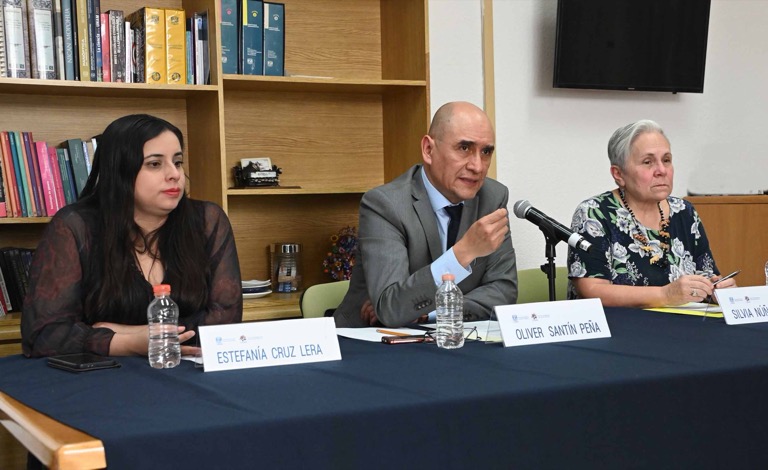
U.S. Elections Are Key to Mexico's Strategy, UNAM Experts Say
Mexico should maintain a long-term strategy and strengthen its ties with both Republicans and Democrats, regardless of the outcome of the U.S. midterm elections on November 3, specialists from the Center for Research on North America (CISAN) at the National Autonomous University of Mexico (UNAM) said.
Brazil elected Lula and ignited hope against the far right
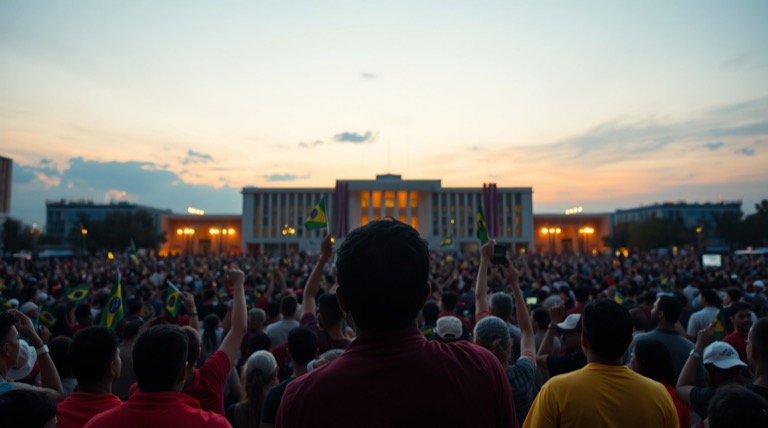
Brazil elected Lula, and with that a moment of hope opens for those who feared the advance of the far right.
Social Justice, Equality and Inclusion: The Principles of Shared Prosperity
The Second Government Report presents Shared Prosperity as a long-term development project, inspired by Mexican Humanism, which proposes that development is measured by the dignity with which people live.