Mexico Brings Its Climate Adaptation Plan to COP31

At COP31, Mexico will present ADAPTA MX 1.0, the first version of its National Climate Change Adaptation Policy, and will co-facilitate ministerial consultations on just transition with Poland, one of the central issues in the negotiations running from November 9 to 20 in Antalya, Türkiye.
The Mexican delegation will push for agreements to accelerate emissions reductions, expand access to climate finance and technology, address loss and damage associated with global warming, and advance implementation of the Paris Agreement, with climate and social justice as the cornerstones of its participation.
It will also share progress on its Nationally Determined Contribution, known as NDC 3.0, which consolidates Mexico's climate commitments, and will seek alliances to put them into practice. The agenda includes recognizing the role of oceans in climate action and strengthening capacities so that governments and communities can respond to the impacts of climate change.
ADAPTA MX 1.0 is one of the country's main announcements at the conference. According to information from the Ministry of Environment and Natural Resources, the document includes an initial risk assessment and 33 adaptation measures, of which 14 relate to droughts and 19 to torrential rains.
The policy was developed through seven regional workshops, with the participation of public institutions, academia and civil society organizations, and it envisions the National Platform for Climate Risks and Adaptation as a tool to guide decisions and anticipate impacts.
Through these measures, Mexico aims to strengthen national and local capacities to reduce risks, protect communities and support solutions grounded in scientific evidence, while broadening opportunities for cooperation and financing for adaptation projects.
The consultations facilitated by Mexico and Poland will seek to advance a mechanism to implement a just transition toward lower-emission economies. The approach proposed by both countries incorporates sustainable production models, labor rights, environmental justice and community well-being.
The delegation is led by José Luis Samaniego Leyva, Undersecretary for Sustainable Development and Circular Economy at Semarnat, and Enrique Ochoa Martínez, Undersecretary for Multilateral Affairs and Human Rights at the Ministry of Foreign Affairs. Representatives from the Ministry of Finance, the Ministry of Energy and the National Institute of Ecology and Climate Change, among other officials, are also taking part.
After more than 12 years, Mexico will once again have its own pavilion at the COP, where representatives of governments, academia, civil society, businesses and international organizations will be able to share experiences on mitigation, adaptation, energy transition, ecosystem conservation and climate finance.
The pavilion's program will give space to solutions driven at the territorial level and to the knowledge and forms of organization of communities facing climate impacts.
COP31, organized by the United Nations Framework Convention on Climate Change, brings together governments and negotiators from nearly every country to agree on actions to address the climate crisis.
More from Environment
All stories →
Mexico Advances Sustainable Solutions to Confront the Water Crisis in the Sierra de Guadalupe
Amid the growing water crisis that threatens millions of people across the country, the Sierra de Guadalupe, located north of the Valley of Mexico, stands out as an example of how collaboration between the private sector and civil society can provide concrete responses.
Sheinbaum Honored for Leadership in Water Policy
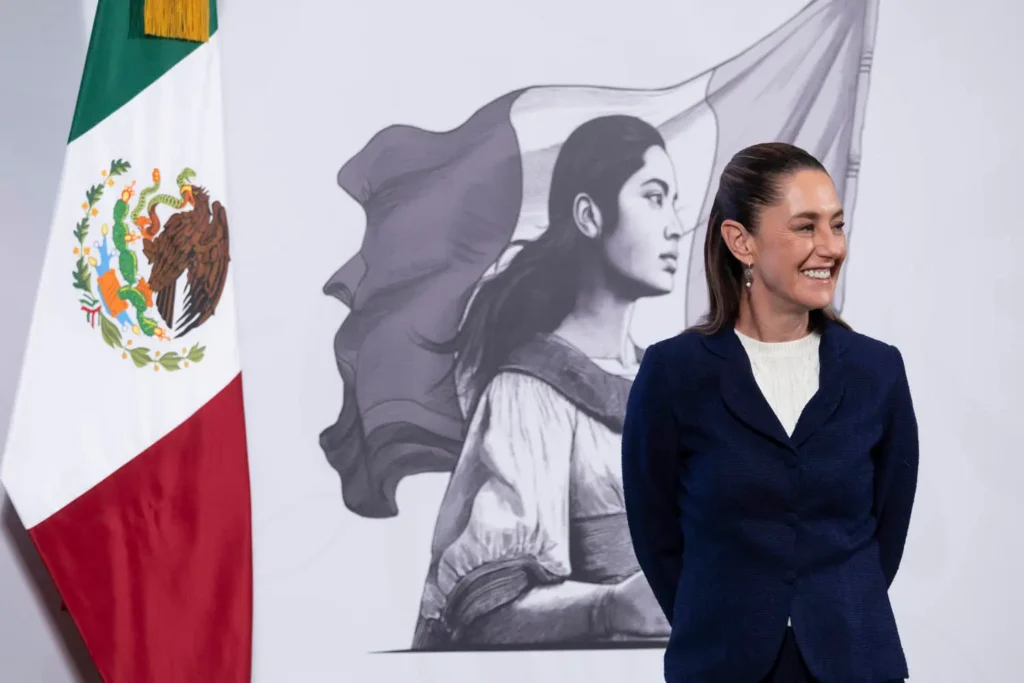
Mexican President Claudia Sheinbaum Pardo has been granted the Award Recipients prize by the Water Environment Federation (WEF). The award is an international

IPN Participates in NASA Space Mission with Microalga Spirulina Project
The National Polytechnic Institute (IPN) once again made its mark in the history of space science by taking part, for the seventh time, in a stratospheric