Vincent Valdez Wins MacArthur for Portraying Latino History in the US
Vincent Valdez wins the MacArthur for portraying Latino history in the US. The Latino painter Vincent Valdez received the 2026 MacArthur Fellowship, one of the most prestigious honors in the United States, for a body of work that...
Vincent Valdez Wins MacArthur for Portraying Latino History in the US
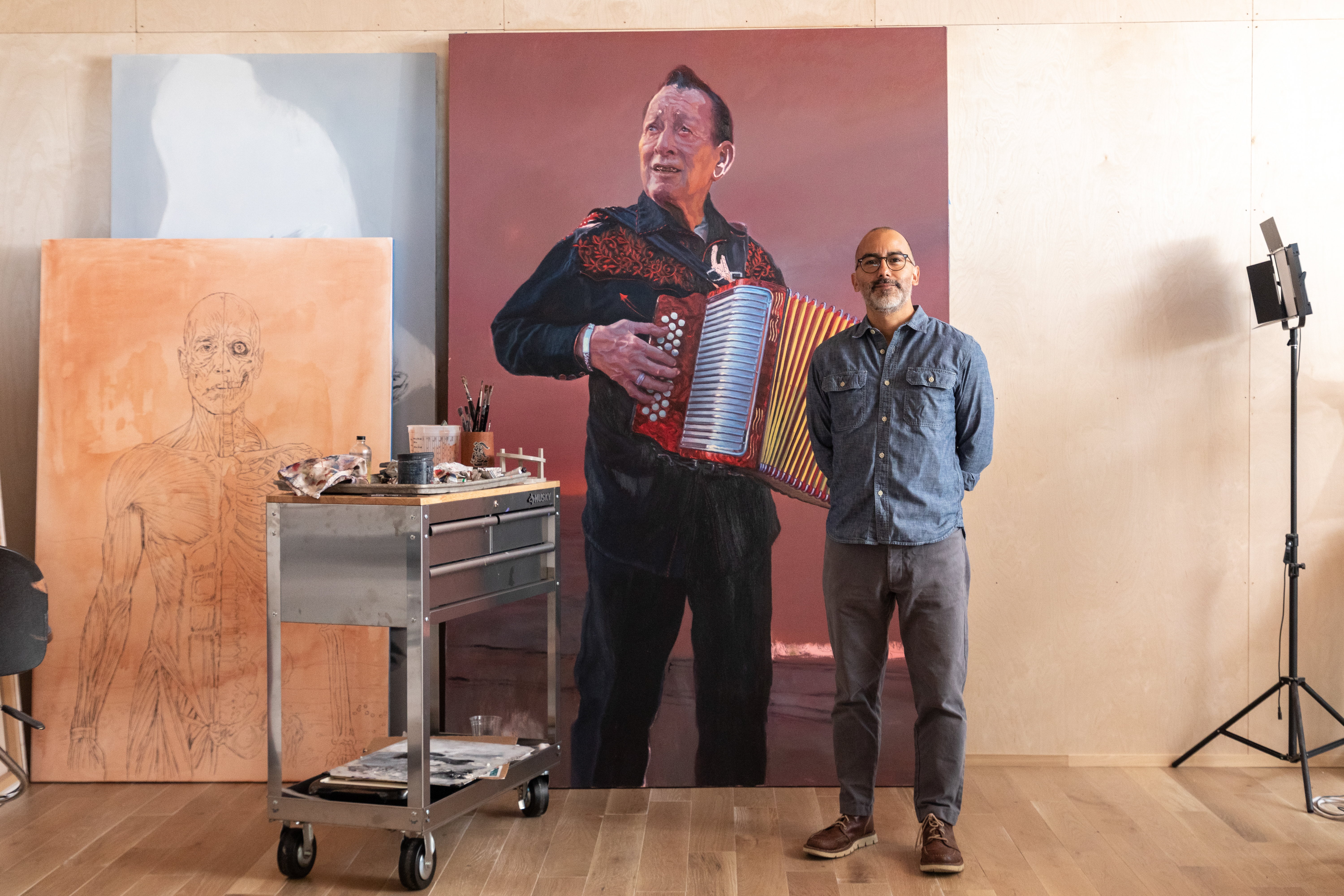
The Latino painter Vincent Valdez received the 2026 MacArthur Fellowship, one of the most prestigious honors in the United States, for a body of work that portrays Latino and Chicano experiences and examines how injustice, violence and resistance run through the country's history. Born in San Antonio, Texas, he lives and works between Houston and his hometown.
The MacArthur Foundation selected Valdez among 20 outstanding individuals in fields such as the arts, science, history, music and literature. The fellowship awards 800 thousand dollars, distributed quarterly over five years, to support the work of its recipients.
Large-format painting, muralism and the visual language of cinema converge in the work of Valdez, who takes historical episodes and brings them into the present to question the versions that tend to be left out of public memory. The MacArthur Foundation highlighted his ability to connect Chicano artistic traditions with political and social histories that are barely visible in the media.
One of his early large-scale projects, El Chavez Ravine, addresses the displacement of a predominantly Mexican-American community in Los Angeles during the construction of the Dodgers stadium in the 1950s. For the work, created together with the musician Ry Cooder, Valdez painted images related to that history on a 1953 ice cream truck.
In The Strangest Fruit, a series of nine paintings, the artist returns to the lynchings of Mexicans and Mexican-Americans that occurred in the southwestern United States between the late 19th century and the 1930s. El Museo del Barrio notes that Valdez used relatives and friends as models to link that historical violence with contemporary resonances.
Another of his works, The Beginning Is Near, An American Trilogy: The City I, brings together four canvases roughly 30 feet long depicting members of the Ku Klux Klan. The presence of current elements, such as a smartphone and a pickup truck, brings the scene into the present and questions the idea that racism belongs only to the past.
The artist has explained that his work seeks to "incite public memory," a phrase that sums up his interest in countering oblivion and distortions of history. His work has also explored moments of collective mourning, such as the series of 12 pieces inspired by the television images of the funeral of the boxer Muhammad Ali.
During 2025 and 2026, Valdez was an artist-in-residence with the American Civil Liberties Union of Texas, where he created The New Americans, a collection of 22 drawings of people, communities and scenes he encountered on his travels through Texas and other parts of the country. The project was also tied to the dissemination of information about rights and civic participation.
In an interview broadcast by the ACLU of Texas, Valdez said his home state was "the place that raised me" and that returning to the communities of his childhood allowed him to reconnect with those who taught him to remember history and fight for a better future, in a Spanish translation.
This fall, the Alamo Colleges District opened La Línea/The Line, an exhibition spanning more than two decades of his work that explores family heritage, memory, identity and the cultural continuity of Chicano, Mexican-American and Latino communities. Valdez, who began his artistic career in San Antonio, said he hoped the show would offer a glimpse of a visual journey that began in that city.
His works are part of collections at the Smithsonian American Art Museum, the National Portrait Gallery, the Los Angeles County Museum of Art and MASS MoCA, among other institutions. The MacArthur Fellowship adds to a career that has brought Latino and Chicano stories to museums and cultural spaces of national reach.
More from Culture
All stories →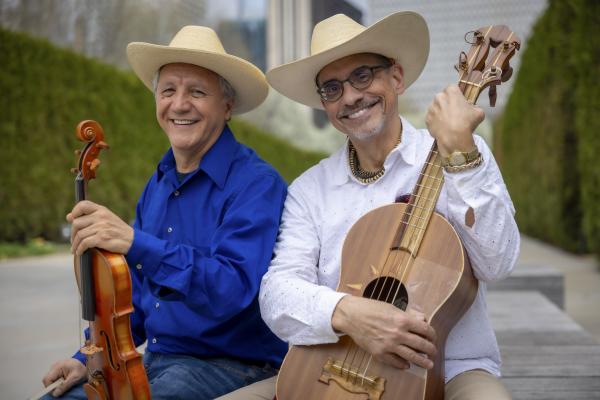
Mexican musician Victor Pichardo receives the highest honor in traditional music in the US
Mexican musician Victor Pichardo receives the highest honor in traditional music in the US. The Mexico City-born musician Victor Pichardo, together with Juan Díes, received the 2026 National Heritage Fellowship from the National Endowment for the Arts.

Tanya Meléndez-Escalante, a Mexican curator, takes over as general manager of the Museum at FIT in New York
The Mexican curator Tanya Meléndez-Escalante has been named general manager of the Museum at the Fashion Institute of Technology (FIT) in New York, where she will oversee areas including operations, fundraising, strategic planning and administration.
Irasema Alcántara to Become First Mexican Woman in Social Sciences at the World Academy of Sciences
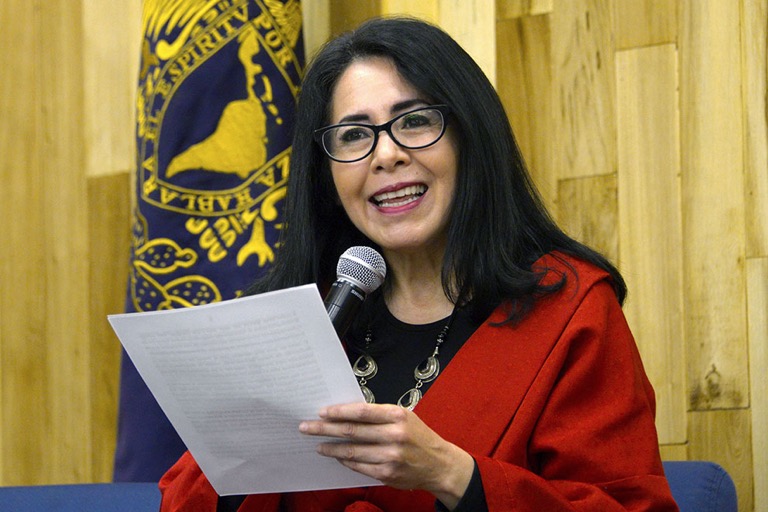
The Mexican researcher Irasema Alcántara Ayala has been elected a member of the World Academy of Sciences (TWAS) and, from January 1, 2027, will hold a place in the field of Economic and Social Sciences, Humanities and Arts, where she will be the first Mexican woman scientist to receive this distinction.