This Day of the Dead, I Wait for Esperanza
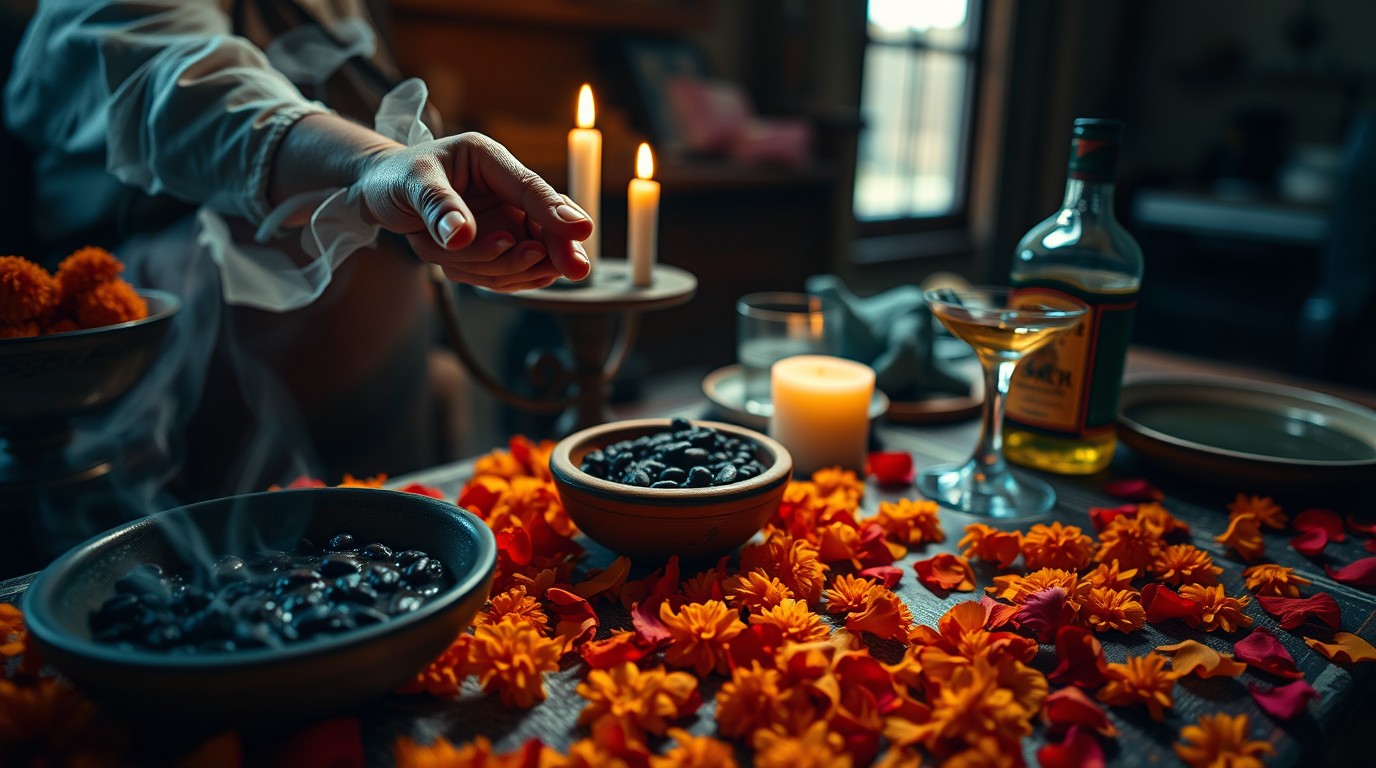
On May 8 of this year my grandmother, Esperanza Colín, died, and since then there is a part of me that still wants to call her, tell her something, ask her if she has put the beans on yet. I miss her like no one else. This Day of the Dead I wait for her for the first time, amid the scent of cempasúchil and copal, with her tequila, her mole de metate and those black beans with epazote that I can still recall with my eyes closed.
My grandmother was the first to believe in me. When I was eight years old she helped me set up my first business: I sold sweets outside, in the courtyard of her house. To her it was not a game. Without speeches, she taught me that I could start something of my own and that my work had value. That confidence stayed with me forever.
I also walked beside her through the streets, carrying and offering avocados, capulines, blackberries, peaches and apples from the trees on her ranch in Michoacán. When she came to Mexico and stayed at her house, we would go door to door selling fruit. I went with her, and as we moved along I learned from her pace, her strength and that way she had of facing life.
My grandmother taught me that I should not bow my head for being a woman, that I did not have to let anyone offend me, and that my worth did not depend on what others said. She taught me to be understanding and humane, and to remember that I am worthy and loved even in the moments when I myself cannot believe it.
At fifteen, my grandfather took her away (in my family they said he stole her), and very young she began to build a family. Of fourteen children, twelve survived; later, she also had to say goodbye to some of them. She lived through the Cristero War when she was barely a girl and had to hide amid those difficult years. In the kitchen of her house she told me those stories, she spoke to me of the ranch and of what she had lived through. Many of the best conversations of my life happened beside her, between a pot on the fire and the smell of something freshly made.
When I was pregnant, she took complete care of me. Sometimes she would call and ask: "Hijita, doesn't the aroma reach you?" Then I understood that she had cooked a pot of black beans in her clay pot, with plenty of epazote, and that there was always a plate waiting for me at her table. That was her way of telling me she was with me, that I had a safe place to return to.
In her final days, when she no longer remembered almost anyone, she still recognized her granddaughter and her great-grandson, my son Santiago. I love my son deeply, and that memory of my grandmother, her love reaching both of us, is one of the gifts I will keep all my life.
The Day of the Dead takes many forms in Mexico. In each region and each family, memory is expressed with its own foods, flowers, prayers and paths; in many of those practices, Indigenous and Catholic inheritances coexist. Syncretism does not erase the differences: it lets them meet around a shared certainty, that those we love still have a place in our home and in our story.
I do not believe an offering takes away the pain of absence. But it can give it a place, an aroma and a voice. This year I will put on the table the flavors she liked, the mole she taught me to prepare and what she used to cook for me. I will welcome her as she welcomed me so many times: with love, with food and with a place that was never empty.
Welcome, Esperanza. Welcome to all the souls we wait for each year to see again, even if only for an instant. I miss you, grandmother; I love you very much and I will always carry your name high.
More from Opinion
All stories →
November 4: When Trumpism Began to Crumble
On November 4, the United States experienced a political jolt that few in the White House — not even in the gilded mansion of Mar-a-Lago — expected.

The Super Bowl: A Luxury and a Political Statement for Mexicans
Attending Super Bowl LX is not just about witnessing the most-watched sporting event on the planet—it is about crossing a symbolic border between spectacle, economy, and politics.
From 'Bad Hombres' to Bad Bunny: the New Political Battleground at the Super Bowl
In 2016, Donald Trump used the phrase “bad hombres” to refer to Latino migrants, stigmatizing entire communities with a racist insult that still echoes in U.S. political memory