From the Sierra Tarahumara to the Great Wall: Indigenous Mexican Athletes Conquer China
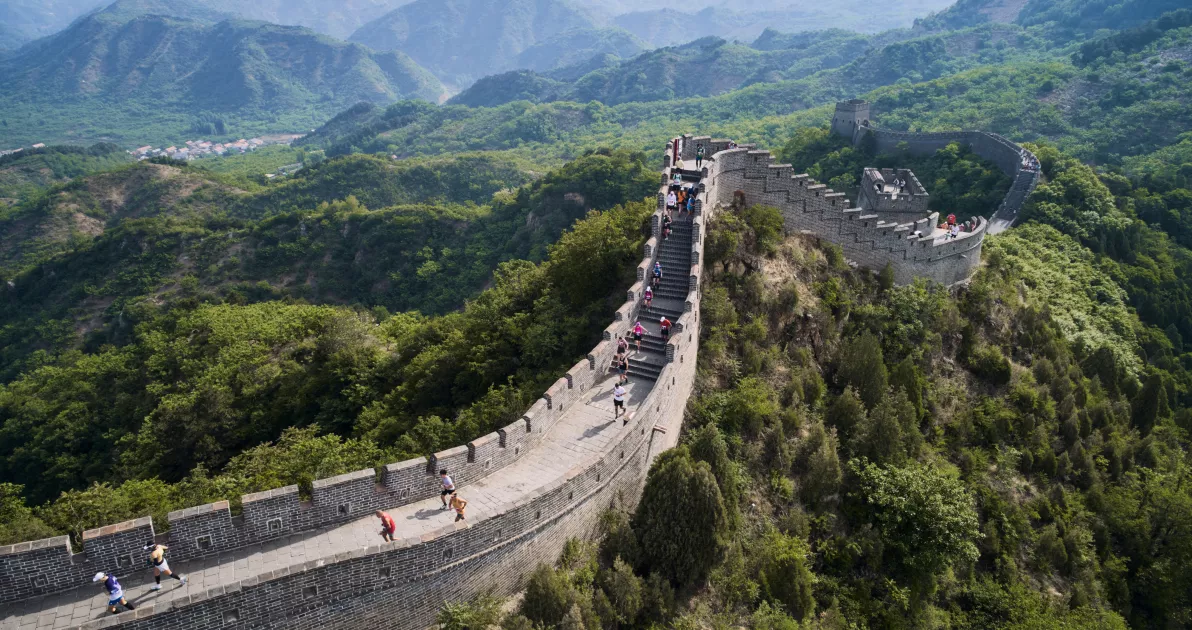
Forged among mountains, ravines, and dirt roads, five Indigenous Mexican athletes crossed the world to emerge victorious from one of the most demanding races on the planet: the Great Wall Marathon of China.
Amid thousands of stone steps, impossible slopes, and a route that challenges even professional runners, the Mexicans from Rarámuri and Mixtec communities dominated the podium at the 23rd Great Wall Marathon, held this past weekend in Huangyaguan, China.
The scene seemed improbable: men and women born in some of the most remote regions of Mexico surpassing international runners on one of the world’s most emblematic monuments.
But for them, running has never been just a sport.
“We were born running. Since we were very little, we used to jog, whether chasing animals or simply playing. It is a legacy our parents and grandparents left us,” said Antonio Ramírez Hernández, a 28-year-old Rarámuri runner and overall winner of the men’s 42-kilometer marathon.
Ramírez, originally from the Sierra Tarahumara in the state of Chihuahua, finished the race with an official time of 3:27:06, according to the event’s results.
Accustomed to running in traditional huarache sandals made with tire soles, Antonio had to adapt to asphalt and wear running shoes due to the conditions of the Chinese course. Even so, he maintained his pace in a competition marked by more than 5,000 steps spread along the Wall.
“I didn’t think about anything. During the race, the goal was simply to reach the end point… It’s very exciting to have won,” he said after the competition.
The Mexican victory did not end there, as in the women’s marathon, Sabina Martínez León, also Rarámuri, earned third place with a time of 4:44:22. Meanwhile, in the 21-kilometer half marathon, Mixtec runners Miriam Morales Hernández and Balbina Morales Santiago finished first and second in the women’s division.
Miriam won with a time of 1:38:49 and also set a new record in the category, while Balbina finished second with 1:57:59. In the men’s half marathon, José Mario Ramírez Hernández secured second place with 1:56:41.
The official results were published by the event organizers, whose race is considered one of the toughest marathons in the world due to its altitude changes, stairways, and extreme weather.
In Mexican and Asian media, images of the Indigenous runners advancing across the Great Wall drew attention not only because of the sporting victory, but also because of their cultural symbolism.
The Rarámuri — whose name can be translated as “those with light feet” — have gained international recognition for their extraordinary physical endurance and tradition of long-distance running in the Sierra Tarahumara. Their story inspired scientific research, documentaries, and books such as Born to Run, which globally popularized their ability to cover enormous distances.
Meanwhile, the Mixtec runners brought another story of endurance to China: that of Indigenous Mexican women who, from rural communities in southern Mexico, now stand out in international competitions.
The race, organized since 1999, crosses one of the most emblematic sections of the Great Wall, about 130 kilometers from Beijing, and every year brings together runners from dozens of countries.
But this year, the spotlight belonged to Mexico. Among flags, cameras, and foreign runners exhausted by the harshness of the route, it was the Indigenous athletes who advanced steadily across the ancient stones of China.
From the Sierra Tarahumara and the Mixteca to the Great Wall, the message was clear: the endurance born in Mexico’s Indigenous communities can also conquer the other side of the world.
Related: Guillermo Cortés conquers the world and rekindles hope for Mexican taekwondo
More from Culture
All stories →
Mexican-American Scholar Angela Valenzuela Receives Educational Justice Award in the U.S.
Researcher Angela Valenzuela has received the 2026 Social Justice in Education Award from the American Educational Research Association (AERA), a recognition of more than three decades of work for the educational rights and opportunities of Mexican-American students and other communities of color.
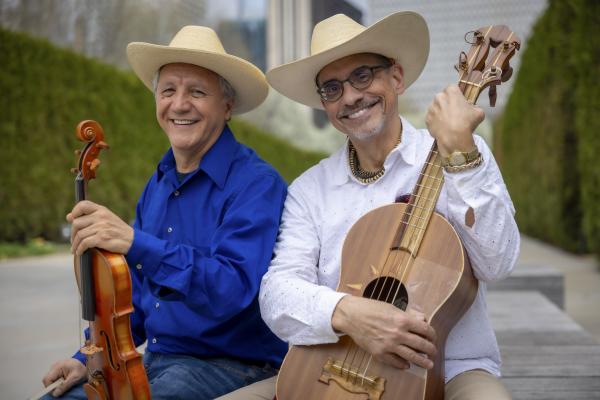
Mexican musician Victor Pichardo receives the highest honor in traditional music in the US
Mexican musician Victor Pichardo receives the highest honor in traditional music in the US. The Mexico City-born musician Victor Pichardo, together with Juan Díes, received the 2026 National Heritage Fellowship from the National Endowment for the Arts.

Tanya Meléndez-Escalante, a Mexican curator, takes over as general manager of the Museum at FIT in New York
The Mexican curator Tanya Meléndez-Escalante has been named general manager of the Museum at the Fashion Institute of Technology (FIT) in New York, where she will oversee areas including operations, fundraising, strategic planning and administration.