Palacio de Bellas Artes opens first major Kati Horna retrospective
The Palace of Fine Arts Museum opens the first major Kati Horna retrospective in Mexico City, with about 205 works tracing her exile and surrealist archive.
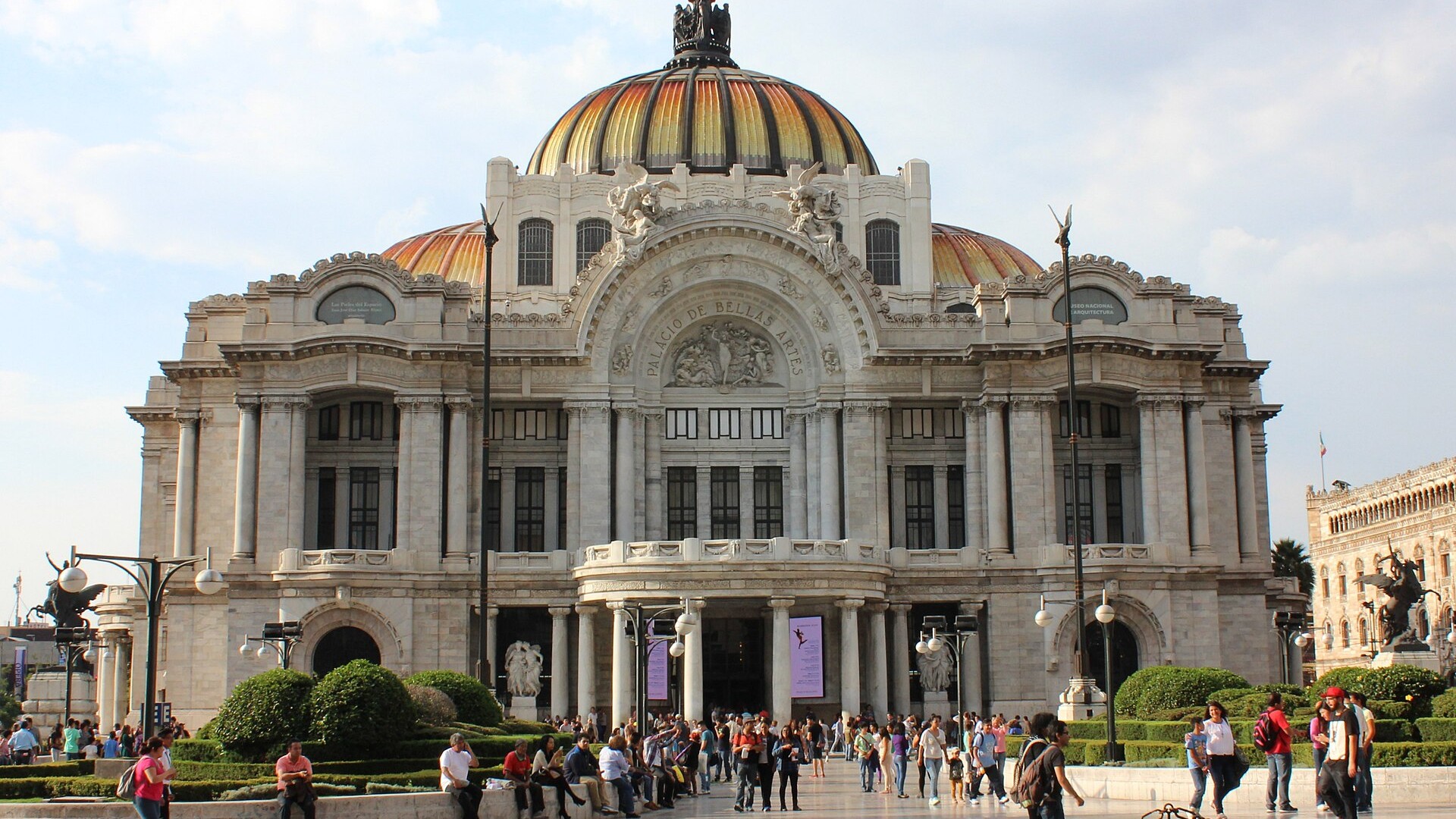
Mexico City's Museo del Palacio de Bellas Artes, the Palace of Fine Arts Museum, opened "Kati Horna. Lo insólito es lo cotidiano" on Oct. 22, 2026, the first large-scale retrospective of the Hungarian-born photographer in the Mexican capital. The exhibition gathers about 205 works and stays on view through Feb. 7, 2027.
The Secretaría de Cultura (Culture Ministry) and the Instituto Nacional de Bellas Artes y Literatura (National Institute of Fine Arts and Literature) organized the show through the museum, according to La Jornada. Around 205 pieces, including period prints, facsimiles, contemporary enlargements, small sculptures, paintings and letters, are arranged in four sections that trace Horna's formation in Europe, her wartime reporting and the photographic stories she built in Mexico.
Born Katalin Deutsch in Szilasbalhás, Hungary, in 1912, Horna moved through Budapest's avant-garde circles, Berlin and Paris before covering the Spanish Civil War in Barcelona, where she met her husband, José Horna. The couple arrived in Mexico in 1939. El Universal reports that her war work included photographs of militiamen that circulated as counter-propaganda. In Mexico she joined a dense network of exiled and local artists, among them Leonora Carrington, Remedios Varo and Mathias Goeritz, and taught at the Universidad Iberoamericana and the Escuela Nacional de Artes Plásticas. Her archive, held at the Centro Nacional de Investigación, Documentación e Información de Artes Plásticas, preserves more than 20,000 negatives and 3,000 original prints. She died in Mexico City in 2000.
The final section, "La banda: redes vivas," collects portraits Horna made of her friends alongside postcards they sent her, including one from Goeritz written in New York in 1967. The retrospective also presents "Historia de un vampiro; sucedió en Coyoacán," her constructed photo-story set in that Mexico City neighborhood, complete for the first time. Garza Usubiaga told El Universal that the exhibition shows "the human being, how she was as an artist committed to her time, an artist with progressive political and social convictions and also a great friend, interested in creating affective and collaborative ties."
The show runs through Feb. 7, 2027. A catalog co-edited with Fundación Jenkins, a lecture on artists exiled by the Spanish Civil War and a film series accompany the exhibition.
Sources: Lo insólito y lo cotidiano en el arte de Kati Horna se muestran en el Museo del Palacio de Bellas Artes · La atracción por lo misterioso se exhibe en Kati Horna. Lo insólito es lo cotidiano
This story was written with the help of artificial intelligence from verified sources and reviewed by a human editor before publication.
More from Culture
All stories →
El Paso opens early voting with record 540,732 registered voters
El Paso County opens early voting Oct. 19 with a record 540,732 registered voters. Find dates, 39 voting sites and what binational families should know.

Tiny Desk Was Too Small for Panteón Rococó's Mexican Ska
American radio's most famous desk lacked the space to contain Panteón Rococó, as eleven musicians, brass, percussion, guitars, dancing and slogans turned NPR's small office into a celebration of Mexican ska, but also into a platform for talking about what Mexico cannot and must not forget.

San Antonio to Gather Voices for a Dialogue on Mexican American Identity
The stories, challenges and cultural expressions of those who build their identity between Mexico and the United States will be the focus of the II Con-ALMA 2026 Forum, a free gathering that will bring together this Saturday, October 3...