Mexico Investigates Social Media's Impact on Young People

Mexico's current political context demands rigorous study to understand how social media shapes the identity, ideology and political practice of new generations, said Maribel Reyes Calixto, a professor and researcher at the Universidad Autónoma de la Ciudad de México (UACM).
"Digital societies also have political elements and are powerful political tools. Building citizenship, democracy and participation all depend on how these tools move," the researcher said in an interview with MxPA.
With an estimated 2 billion users per month, according to the research firm Resourcera, TikTok occupies a central place of interest in the corridors of universities and legislative chambers. The same firm reports that the platform's user base in Mexico stands at 85.4 million in 2026.
This reality has led Mexico's president, Claudia Sheinbaum Pardo, to present a decree in October 2026 to guarantee safe spaces for girls, boys and adolescents. The president stressed that she held dialogue with representatives of various digital platforms and that all agreed to take action in their respective spaces.
Maribel also discussed the importance of the political context in Latin America, where social media and especially TikTok have been key to capturing young people's attention.
The concern of Mexican researchers also stems from TikTok's constant expansion in the region, since according to Resourcera the network has 365.8 million users in Latin America, behind only the Asia-Pacific and Middle East-Africa regions. Mexico, however, ranks fourth in the world in users of the platform, behind the United States, Indonesia and Brazil.
The internet and new digital platforms have brought an unprecedented capacity to organize and share political positions; however, the researcher warns that they also serve to attack our countries' democracies through algorithms and bot farms: "It is a double-edged sword, for democracy. There is a greater possibility of expansion for certain voices, but there is also an avalanche of content that is hegemonic, that shapes and replicates ideologies and biases above others."
The interest of Mexican researchers is not limited to politics; they also analyze gender, feminism and stereotypes within these networks. "While there is a struggle and a response for equality, there is indeed a very strong replication of traditional stereotypes that remains very strong," Maribel shared.
The researcher also commented on the constant concern about children's access to sociodigital networks, where she immediately stated that they are not safe for minors. It is worrying not only who may be on the other side of the screen interacting with children, but also the content itself present on these platforms.
Fortunately, Maribel notes a special interest among new generations of UACM researchers in making TikTok and sociodigital networks their object of study.
The expert also commented that this has forced colleagues to update their skills and face the challenges of this new digital world in order to meet students' needs: "Those of us who have to get to the forefront are us, because we are from the last century. That is why this research project is important, because we entered the topic with the fear of being Generation X, we come from mass media... leaving our comfort zone is important and thus easing the path for young researchers," reflected the UACM professor.
Researcher Maribel Reyes also extended a cordial invitation to follow closely the presentations by researchers at the "Third Colloquium on Technology, Society and Culture," which was held on November 3, 2026 at the Cuautepec Campus of the UACM. During this colloquium, the results of a study carried out between 2025 and 2026 with 246 UACM students on the tensions between entertainment, information and risk perception in digital environments were presented.
More from Culture
All stories →
Mexico City cempasúchil harvest hits record 10 million plants before Day of the Dead
Mexico City growers produced a record 10 million cempasúchil plants for Day of the Dead, a 53.8% jump. See prices, where to buy and the Zócalo ofrenda.
Fresno father of four removed to Mexico 16 days after ICE arrest
Luis Arreguín lived 49 years in the US before ICE removed him to Mexico 16 days after his Fresno arrest, as deportees now land in Mexican border cities.
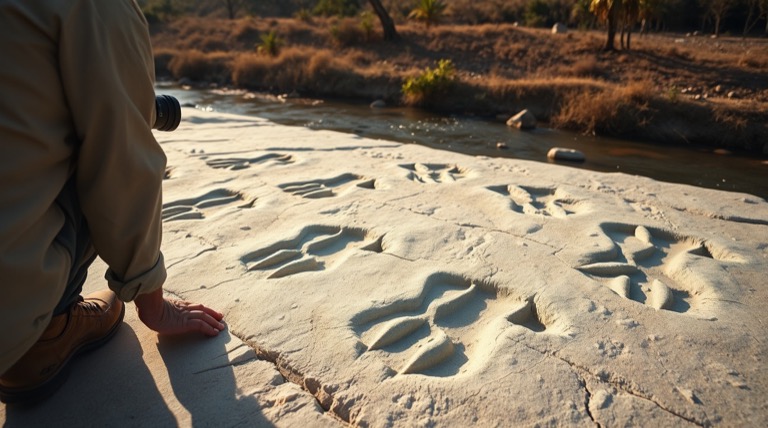
50 dinosaur footprints from 65 million years ago found in Michoacán
At least 50 fossilized dinosaur footprints have been identified in San Juan de los Plátanos, a community in the municipality of Apatzingán, in Michoacán, a state in western Mexico; the traces are approximately 65 million years old.