
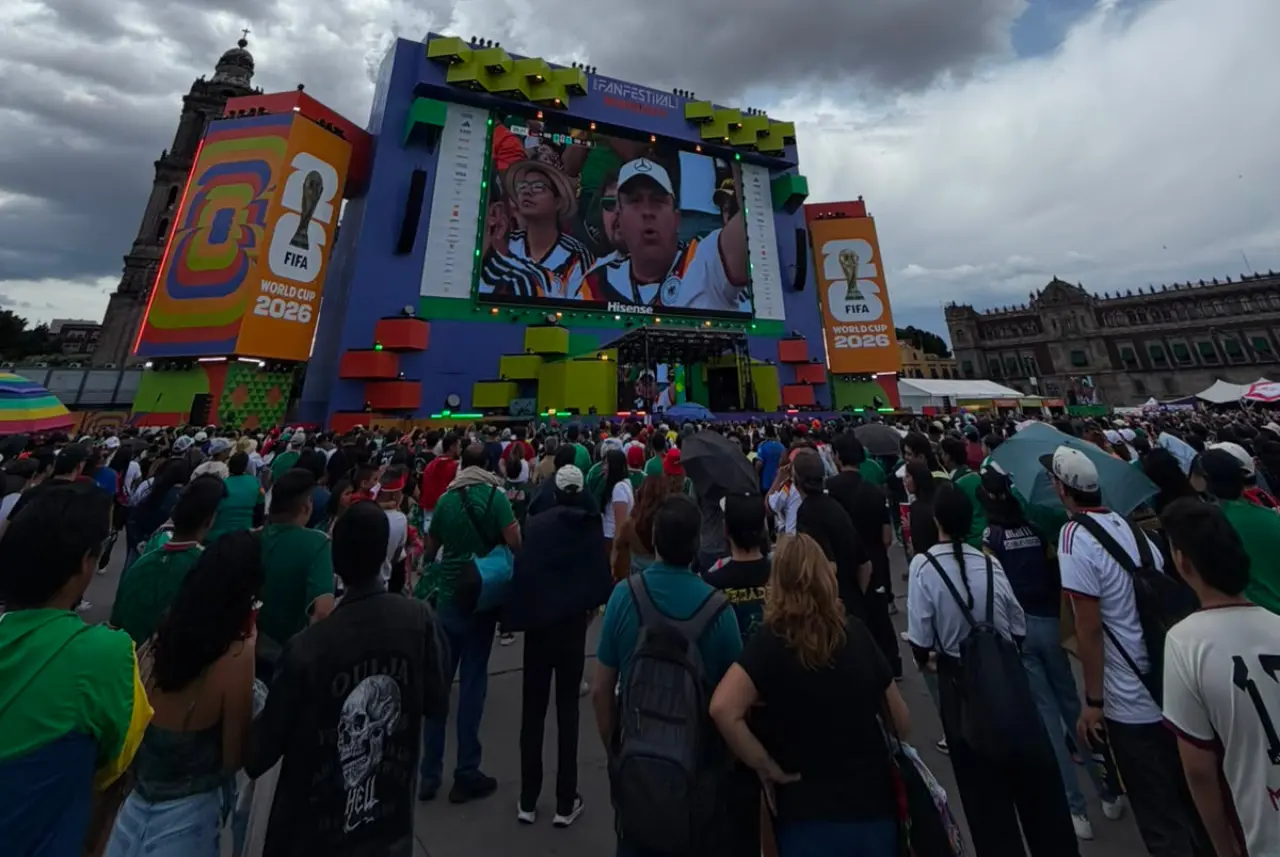
The 2026 World Cup generated an estimated $3.73 billion in economic activity across Mexico City, Guadalajara and Monterrey, where the arrival of 7.8 million domestic and international travelers boosted tourism, hotels, restaurants and airport operations.
Of the total economic impact, approximately $2.43 billion was directly related to tourism, according to a report presented by Mexico’s Minister of Tourism, Josefina Rodríguez Zamora.
The event also generated 130,900 jobs across Mexico’s three host cities: 100,000 in Mexico City, 15,800 in Monterrey and 15,100 in Guadalajara.
The figures cover the period from June 8 to July 19 and include both tourists — those who spent at least one night at their destination — and day visitors who traveled to the cities without staying overnight.
The report incorporates information from state tourism departments, Datatur’s Hotel Monitoring System, business chambers, lodging platforms, airport groups, the Mexico City International Airport and the Felipe Ángeles International Airport, among other sources.
“For several weeks, the world turned its eyes toward Mexico, but what was most important was that millions of people had the opportunity to discover the heart of our country,” Rodríguez Zamora said.
“They left talking about our foods, our traditions and our scenic wonders, but above all about the hospitality of the Mexican people. That is the most valuable legacy of the World Cup and the best tourism promotion our country could have,” she added.
Average hotel occupancy across the three cities stood at 66 percent during the World Cup’s five weeks, 13 percent higher than during the same period in 2025.
On match days, occupancy rose to between 85 and 90 percent amid increased demand for accommodations.
The hotel sector also reported an average increase of 51.5 percent in room rates, while food and beverage establishments recorded sales increases ranging from 50 to 80 percent.
Average spending per customer at restaurants and other establishments increased by 60 percent during the World Cup.
Airports serving the host cities handled 6.4 million passengers: 4.2 million on domestic flights and 2.2 million on international routes.
The Felipe Ángeles International Airport reported an 18 percent increase in international passenger traffic compared with the same period a year earlier. Guadalajara’s airport posted an 11.5 percent increase; Monterrey’s, 10.3 percent; and the Mexico City International Airport, 1.5 percent.
Mexico City received 4.4 million travelers, the highest figure among the three host cities. Of those, 2.5 million were day visitors and 1.9 million were tourists.
The activity generated an economic impact of approximately $1.49 billion, 41 percent more than during the period from June 8 to July 19, 2025.
Among tourists who stayed overnight in the capital, 68 percent chose hotels and 32 percent used digital lodging platforms.
Guadalajara received 2.3 million travelers, including 1.4 million day visitors and 918,000 tourists. The city recorded an economic impact of approximately $656 million.
In Guadalajara, 78 percent of tourists stayed in hotels and 22 percent used digital lodging platforms.
Monterrey received 1.1 million travelers: 610,000 day visitors and 490,000 tourists. The economic impact on the city reached approximately $287 million, 21 percent higher than during the same period in 2025.
In the capital of Nuevo León, 75 percent of tourists stayed in hotels and 25 percent used lodging platforms.
FIFA Fan Festivals in the three host cities recorded combined attendance of more than 6.7 million.
Mexico City and Monterrey each reported 2.5 million visits, while Guadalajara recorded 1.72 million.
The Ministry of Tourism attributed the results to coordination among federal, state, and municipal authorities, as well as the participation of business chambers, associations, tourism service providers, and workers across the sector.
As part of its strategy to maintain tourism momentum after the tournament, the ministry launched the campaign “They Came for the World Cup, They’ll Return for Mexico,” aimed at promoting other destinations to those who visited the host cities.
“The World Cup has ended, but its impact on Mexican tourism will continue for years to come. Today, millions of people have experienced our country firsthand and know that Mexico offers diverse, high-quality tourism experiences and the warmth of our people,” Rodríguez Zamora said.
*Currency amounts were converted using the July 22, 2026 market rate of approximately 17.4055 Mexican pesos per U.S. dollar and rounded for clarity. Exchange rates fluctuate.
Related: Mexico Brings the Party the World Cup Never Knew It Needed