Brazil elected Lula and ignited hope against the far right
Brazil elected Lula, and with that a moment of hope opens for those who feared the advance of the far right.
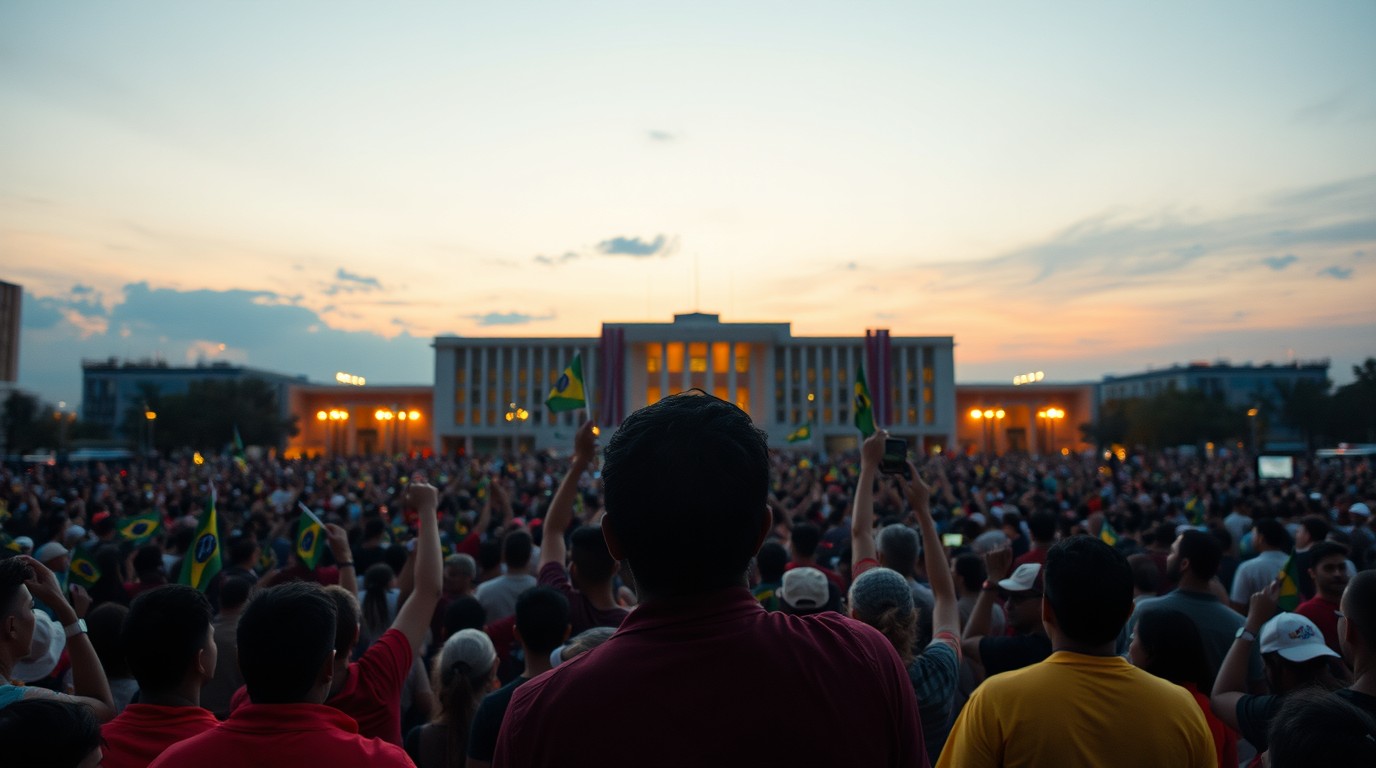
The green and yellow of Brazil did not erase the red: on Sunday, the Brazilian people again elected Luiz Inácio Lula da Silva and blocked the far right's path; within that mix of colors there is a story bigger than an election, the story of a country that refused to surrender its future without a fight.
But every victory brings its aftermath, and Brazil's begins now: Lula won with 51.79 percent of the vote, after trailing in the first round, even though nearly half the country chose Flávio Bolsonaro; the result stopped the far right, but did not make it disappear.
Therein lies one of the hardest lessons of this election: defeating an authoritarian project at the ballot box is not enough to disarm the ideas, grievances and fears that feed it; nor is it enough to celebrate for one night, because the next day you have to govern for those who voted for Lula and for those who did not, without renouncing democracy or letting the country grow accustomed to hatred again.
The far right does not always arrive with the same face, but it tends to offer simple answers to real wounds, to turn the adversary into an enemy and to present inequality as if it were the natural order of things; that is why the democratic response cannot be limited to denouncing it, it has to improve people's concrete lives, open horizons and demonstrate that social justice is not an empty promise.
The warning about the power of digital platforms also remains: Lula's campaign denounced restrictions and algorithmic recommendations that, in its view, favored Bolsonaro, while Meta denied having supported a candidate and attributed the problems cited to technical failures; the electoral court demanded equal treatment for the campaigns, and although it cannot be said that the algorithms decided the election, a question that Latin America cannot dodge was exposed: who watches over those who control the circulation of ideas.
Voting was never a minor formality, but in elections like this one it becomes a decision about direction: voting to move forward, to protect the institutions, to defend the right to dissent and to ensure the future does not fall into the hands of those who promise order in exchange for cutting freedoms; every ballot counts, especially when democracy is contested as much in the streets and on screens as at the ballot box.
From Mexico, Claudia Sheinbaum was among the first to congratulate Lula: "Long live democracy, the people of Brazil won. Congratulations President Lula!" she wrote; the next day she opened her morning conference celebrating the result as "a breath of fresh air for Latin America and the Caribbean." Lula thanked her for the call and wrote that the victory also belonged to "all Latin American democracies."
Brazil and Mexico are not the same and do not face the same challenges, but today they represent two of the main spaces of left-wing government in a region where the far right seeks to grow; their weight is also expressed in political networks such as the Grupo de Puebla and the Foro de São Paulo, where different progressive forces have defended regional integration and the sovereignty of peoples.
Being red is not a shame to be hidden: it is recognizing the dignity of those who work, support their households and want to decide on the country they build every day; it is defending that politics also speaks of wages, rights and opportunities, and that the pride of the working class has a place in the future.
The Brazilian election leaves a victory that moves us and a task that admits no rest: organize, participate, protect the truth and demand that governments respond to the people; because voting can stop a setback and open a door, but crossing it requires a people willing to defend democracy and to push, again and again, toward new horizons.
More from Politics
All stories →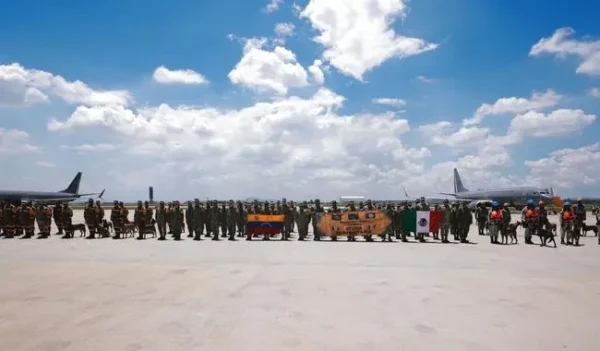
Mexico Sends Rescue Teams, Medical Personnel, and Search-and-Rescue Dogs to Venezuela Following Double Earthquake
Mexico has dispatched a humanitarian mission to Venezuela to support search, rescue, and medical assistance efforts following the magnitude 7.2 and 7.5 earthquakes

Sheinbaum denies FBI claims and asserts that U.S. agents do not operate in Mexico
President Claudia Sheinbaum said no joint operations with United States agencies are conducted within Mexico.

Sheinbaum Details Phone Call With Trump, Highlights Sharp Drop in Fentanyl Trafficking
Mexican President Claudia Sheinbaum said she held a “very cordial” phone phone call with Trump, during which the two leaders reviewed security cooperation, drug trafficking, trade and investment, while reaffirming respect for national sovereignty.