Mexican Scientist Leads Project to Degrade Plastics Using Insects
Dr. Diana Issell Sandoval Cárdenas is conducting research leads a project aims to degrade plastics Using Insects.
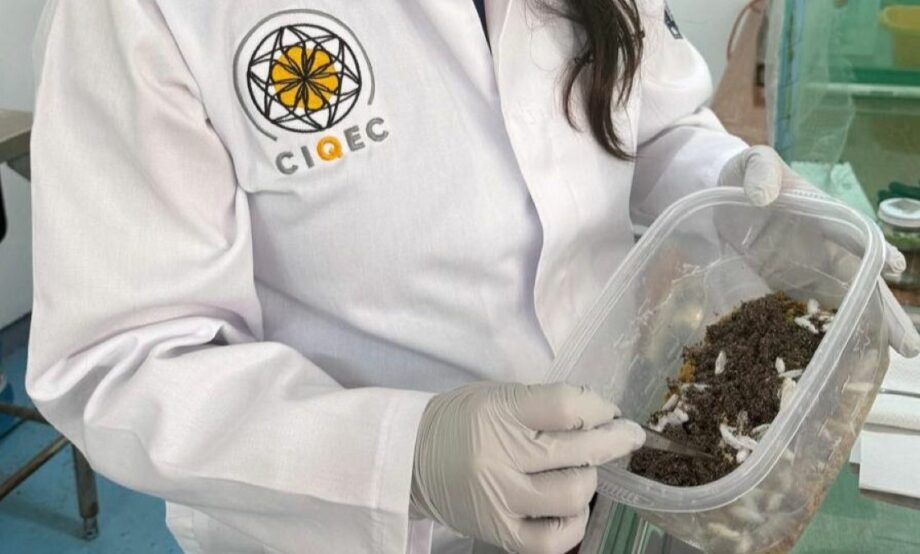
*The researcher focused on Styrofoam because it is a widely used plastic that is difficult to degrade, thus causing significant pollution.
By Canal Once. Mexican Press Agency.
Dr. Diana Issell Sandoval Cárdenas, who holds a PhD in Applied Science and Advanced Technology from CICATA-Querétaro, part of the National Polytechnic Institute, is conducting research aimed at reducing the impact of plastic waste by using insects.
This study, titled “Biodegradation of Plastics Using Insects and Their Associated Microbiota,” is being developed at the Department of Chemistry and is supported by the Autonomous University of Querétaro. Specifically, the study uses the wax moth in its larval stage to break down certain substances, including Styrofoam or polystyrene.
The researcher explains that the wax moth naturally feeds on beeswax from honeycombs, breaking down their structures and reintegrating the elements into the food chain.
“They have enzymes and microorganisms associated with their digestive tract that allow them to break down these chemical bonds and, potentially, degrade these plastics,” the specialist explained.
Dr. Diana Sandoval, who merges biotechnology with nanotechnology to create innovations for environmental applications, aims to find a more sustainable option for degrading plastic waste, which is currently a major environmental problem worldwide.
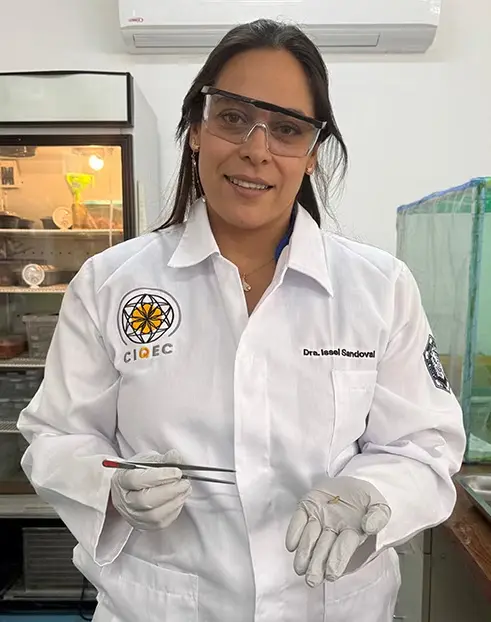
She points out that while there are existing methods to degrade plastics, they often result in a high carbon footprint and the release of harmful greenhouse gases.
By using two species of insect larvae—the lesser wax moth and the greater wax moth—it may be possible to develop a more environmentally friendly alternative.
She also notes that her focus on Styrofoam stems from its widespread use and difficulty in degrading, which results in considerable pollution.
“I realized there were very few research approaches targeting polystyrene, even though it’s a plastic that, while not generating huge amounts of mass, does create large volumes.”
The project, led by Sandoval Cárdenas, is also assessing whether the ingestion of synthetic plastics affects the health and mortality of the larvae. A probiotic is being developed to improve their efficiency in the degradation process.
To avoid completely altering the larvae’s diet, they are given an artificial diet that includes beeswax enriched with flour, glycerol, and honey, the researcher explained.
The Center for Research in Circular Economy has determined that preliminary results are promising and could offer an innovative solution to break down synthetic molecules, using a design that helps protect the environment and offers ecological and health benefits.
“What we’ve observed is that, in a short period of time—about 10 days or a week—just one larva can reduce the volume of a 1-cubic-centimeter Styrofoam cube by 25% of its mass. That gives us a projection suggesting that a significant amount of Styrofoam could be eliminated in a relatively short time,” said Dr. Sandoval Cárdenas.
Related: Cloud Juice: Mexicans fight climate change with water harvesting
More from Environment
All stories →
Mexico Advances Sustainable Solutions to Confront the Water Crisis in the Sierra de Guadalupe
Amid the growing water crisis that threatens millions of people across the country, the Sierra de Guadalupe, located north of the Valley of Mexico, stands out as an example of how collaboration between the private sector and civil society can provide concrete responses.
Sheinbaum Honored for Leadership in Water Policy
Mexican President Claudia Sheinbaum Pardo has been granted the Award Recipients prize by the Water Environment Federation (WEF). The award is an international
IPN Participates in NASA Space Mission with Microalga Spirulina Project
The National Polytechnic Institute (IPN) once again made its mark in the history of space science by taking part, for the seventh time, in a stratospheric