Fitch assigns Pemex a ‘AA(mex)’ national rating with Stable outlook
Fitch Ratings, an American credit rating agency, assigned Petróleos Mexicanos (Pemex) a long-term national rating of “AA(mex)” on the local scale, with a Stable outlook.
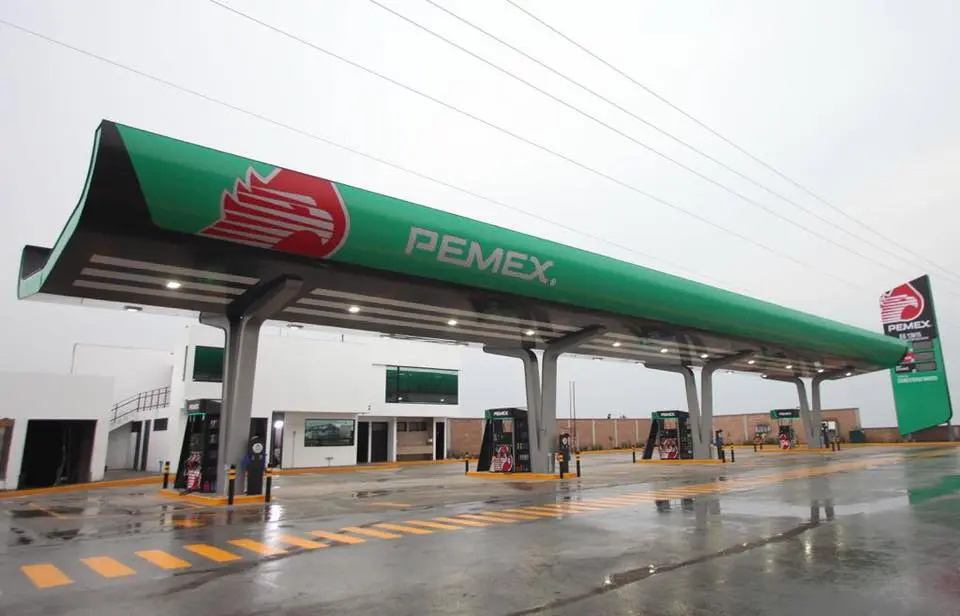
Fitch Ratings, an American credit rating agency, assigned Petróleos Mexicanos (Pemex) a long-term national rating of “AA(mex)” on the local scale, with a Stable outlook. The rating is two notches below Mexico’s sovereign rating, currently “AAA.”
According to Fitch, the assessment primarily reflects the close financial and operational ties between Pemex and the Mexican state, as well as the high likelihood of government support.
On the international scale, Fitch affirmed Pemex’s rating at “BB+”, also with a Stable outlook, consistent with the newly assigned national rating based on the agency’s methodology.
The decision is based on the application of Fitch’s Government-Related Entities (GRE) framework, which automatically positions Pemex two levels below the implied sovereign rating of “AAA” on the national scale.
Fitch highlighted legislative changes promoted by the Mexican government that allow Pemex to share a debt ceiling with the Ministry of Finance (SHCP), a measure that meaningfully reduces the company’s leverage and financing costs.
Among the most significant actions, the agency pointed to the $9.9 billion tender offer to repurchase eight Pemex debt issuances, financed with SHCP resources. Fitch said the move provides concrete evidence of stronger government control, direction, and backing of Pemex’s financial strategy.
In its medium-term assumptions, Fitch projected average West Texas Intermediate (WTI) crude prices of $64 per barrel in 2025, $58 in 2026, and $57 in 2027.
The agency also expects hydrocarbon production to remain stable at 1.7 million barrels of oil equivalent per day, with annual capital expenditures of around $12 billion.
Finally, the analysis assumes payments to the government will represent roughly 60% of EBITDA, and that short-term debt maturities will be refinanced at an estimated 8% rate—factors underpinning the Stable outlook.
Related: Sheinbaum Announces $4.6 Million Investment for New Chocolate Plant in Tabasco
More from Economy
All stories →
Mexico's Four National Plans: Infrastructure, Energy, Security and Water
The fourth chapter groups public investment into four national plans, each with measurable targets, accountable owners and a budget. In infrastructure, the plan invests more than 960 billion pesos in 2026, roughly 52 billion dollars, in transport links, ports, airports, trains, energy, hospitals and schools.

Social development: pensions, hospitals, scholarships and housing as rights
The third chapter of the report argues that social policy has stopped being a complement and become the structural axis of growth. By the end of 2026, the Wellbeing Programs will reach 42,860,296 people, with an investment of close to one trillion pesos, about 54 billion dollars, delivered directly through the Wellbeing Card.
Economy and Investment: Stable Prices, Formal Employment and Industrial Hubs Looking Toward North America
The economic chapter of the Second Report brings together price stability, formal employment, investment and regional development. Gross domestic product grew 1.4% in the second quarter of 2026 compared with the previous quarter…