Linda Lara-Jacobo Brings Mexican Science to the Heart of Border Health
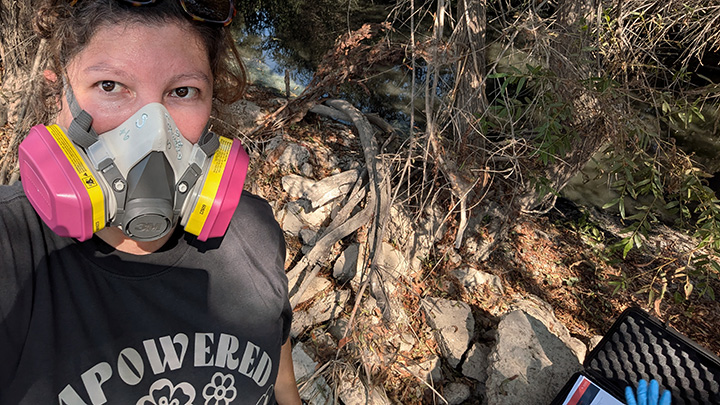
Born and raised in Tijuana, scientist Linda Lara-Jacobo received the 2026 Early Career Award from the American Association for the Advancement of Science (AAAS) for bringing research closer to communities and fostering dialogue between specialists and residents; this year she was also named among the 101 most influential Latinos in the United States by Latino Leaders magazine.
Lara-Jacobo is an assistant professor of Public Health at San Diego State University, on its Imperial Valley campus, where she studies how environmental conditions and natural resource management affect health, especially in border communities.
Her scientific training began in Baja California, where she earned a bachelor's degree in Biological and Pharmaceutical Chemistry at the Universidad Autónoma de Baja California and a master's degree in Life Sciences at the Centro de Investigación Científica y de Educación Superior de Ensenada; she later completed a doctorate in Water Sciences, with a specialization in toxicogenomics, in Canada.
Toxicogenomics studies how toxic substances can affect the activity of genes and proteins, a background that now informs her work on pollution, environmental exposure and public health; SDSU notes that she has more than a decade of experience in research, teaching and mentoring, including with Indigenous and rural communities.
For Lara-Jacobo, the border between Mexico and the United States cannot divide environmental problems or scientific responses, which is why she co-founded and co-directs the Binational Border Research Laboratory in Environmental Health, which works between the Imperial Valley and Mexicali alongside researchers from UABC.
The laboratory studies issues shared by both sides of the international line, such as air and water quality, the impacts of agricultural activity and health inequalities; among its projects it has also tracked diseases in migratory birds and cases of allergies and asthma in the Mexicali and Imperial Valley region.
In 2024, SDSU recognized Lara-Jacobo with the Transborder Research and Creative Activity Award for her work on binational environmental and health problems; the university highlighted that her approach treats these challenges as shared matters, rather than as separate problems for each country.
Her work has also engaged with the Tijuana River pollution crisis, which carries untreated wastewater, industrial waste and urban runoff into southern San Diego County; Lara-Jacobo has taken part in studies on the environmental and health impact of that transborder watershed.
A study published in August 2026 by a team from SDSU and other institutions analyzed responses from 409 adults who live or work in communities in southern San Diego County; most expressed concern about air and water quality, and reported respiratory, gastrointestinal and psychological distress symptoms.
That study recorded self-reported symptoms and associations between the perception of worse air quality and a higher prevalence of ailments, so its results do not by themselves establish that pollution caused each condition; its authors noted that the findings support public health interventions and binational actions.
Applied research has also led Lara-Jacobo to work with Mexican students: during the summer of 2026 she collaborated with a UABC student from Ensenada on a project that exposed fish eggs to water from the Tijuana and Nuevo rivers, in Mexicali, to observe possible differences in malformations and growth.
Her trajectory also includes the Homeward Bound program, which brought together women scientists from different countries to study climate change, leadership and equity in STEM disciplines; the experience took her to Antarctica and broadened the international reach of her work.
In recognizing her among the most influential Latinos of 2026, Latino Leaders highlighted her binational research and her push for greater Latino representation in science and public health; Lara-Jacobo dedicated the recognition to the Mexicali and Imperial Valley region, as well as to her students and the community she serves.
More from Environment
All stories →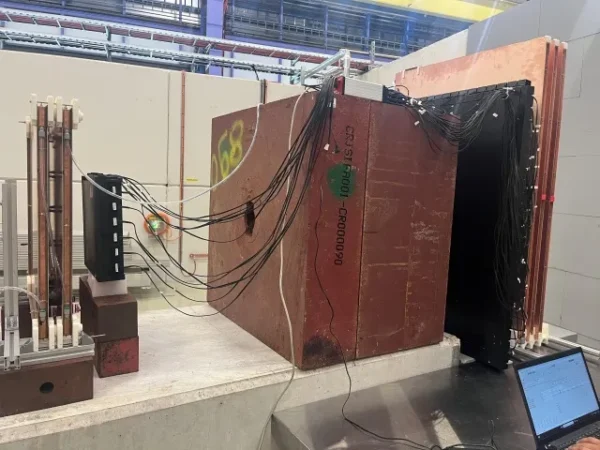
Mexican Detector Seeks to Make History at the Large Hadron Collider
A particle detector developed under Mexican leadership could become part of ALICE 3, the next-generation experiment expected to operate at CERN’s Large Hadron Collider beginning in 2036.

Mexico Bans Imports of Vehicles That Don’t Meet Environmental Standards
The Ministry of Environment and Natural Resources (Semarnat) and the Ministry of Economy announced an agreement prohibiting imports of vehicles that fail to comply with Mexico’s environmental regulations.

EU and Mexico strengthen cooperation in clean energy and circular economy
This Tuesday, the European Commissioner for International Partnerships Jozef Síkela will visit Mexico to strengthen cooperation in clean energy, sustainable transportation, circular economy and green finance.