Mazda Will Maintain Operations in Mexico: Sheinbaum
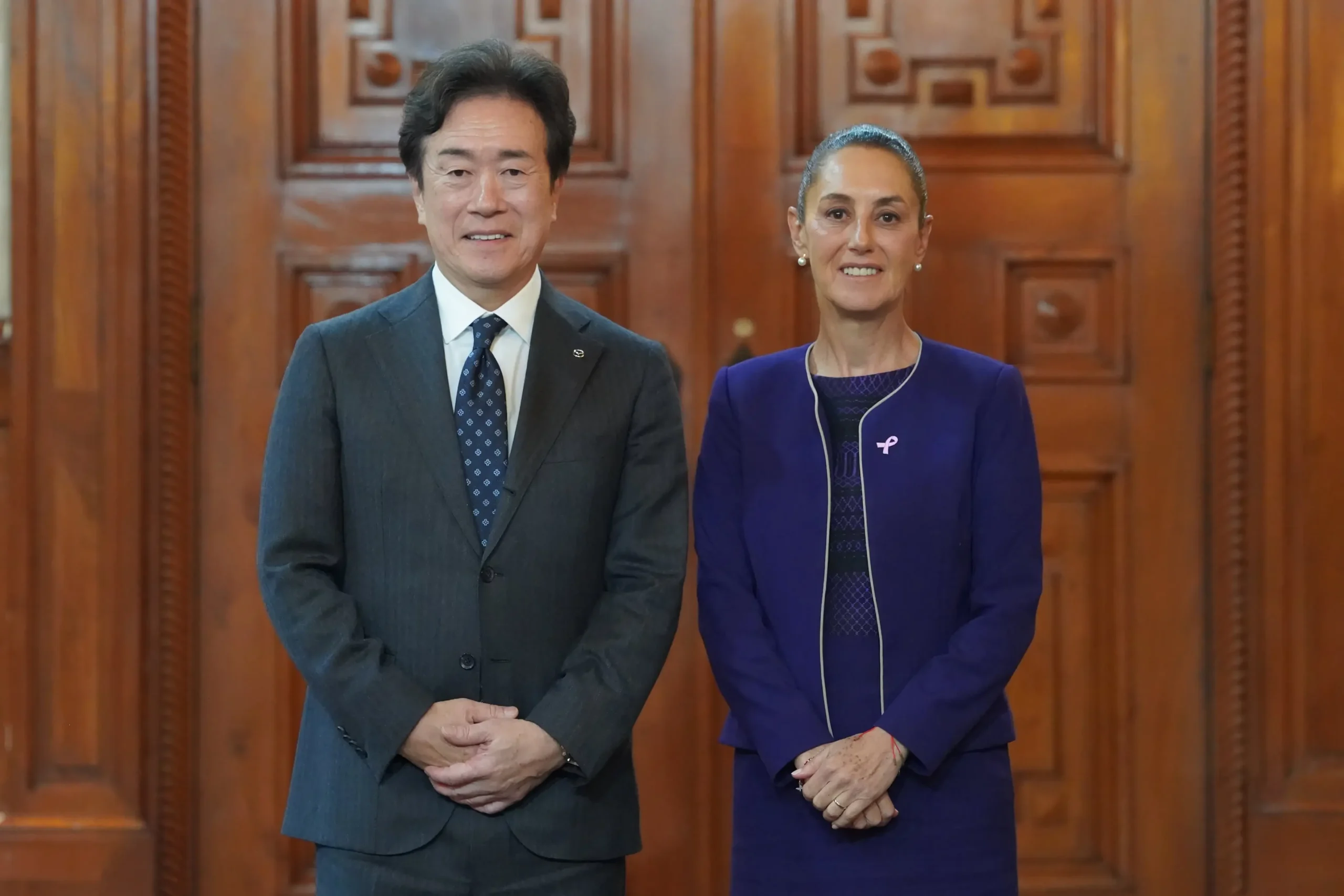
President Claudia Sheinbaum Pardo confirmed that Mazda’s production plant in Mexico will continue its operations, following a meeting with the company’s CEO, Masahiro Moro.
“Obviously, the automotive industries, due to the issue of tariffs, face uncertainty toward the future, and he stated that the plant in Mexico will continue, and we were very pleased,” the President said following her meeting with the CEO.
Sheinbaum explained that the Japanese company’s commitment represents a sign of confidence in Mexico and its automotive industry, in a context of global adjustments caused by the tariffs imposed by the United States on imports from the sector.
“That plant is of great importance because it produces automobiles for both the national and international markets,” Sheinbaum emphasized.
The Mazda de México Vehicle Operation (MMVO) plant, located in Salamanca, Guanajuato, began operations in 2014 and has become one of the company’s most important facilities outside Japan. From its assembly lines roll out models such as the Mazda2, Mazda3, and versions of the CX-30, vehicles destined for both the local market and for North America and Latin America.
The company’s commitment to maintaining its production presence in Mexico is interpreted as a sign of stability for one of the key sectors of the national economy. The automotive industry represents around 3.5% of national GDP and nearly 20% of the country’s manufacturing exports.
Over the last decade, Mazda has invested more than $1.2 billion USD in its Mexican plant and employs more than 5,000 workers directly and indirectly in the Bajío region, considered a strategic automotive hub along with the states of Querétaro and Aguascalientes.
The announcement comes amid the renegotiation of tariff agreements with the United States, where tensions persist over the production and export of electric and combustion vehicles.
The Mexican government has reiterated its intention to strengthen domestic value chains and attract new investments in sustainable mobility.
In this context, President Sheinbaum stated that her administration will continue to support the technological expansion of automotive plants operating in Mexico, and that agreements with global corporations “are part of the commitment to promote industrial development with well-paid jobs and greater added value.”
The continuation of Mazda’s operations in the country reinforces Mexico’s position as one of the main automotive production centers in the world, alongside the United States, China, and Japan.
More from Economy
All stories →
Mexico's Four National Plans: Infrastructure, Energy, Security and Water
The fourth chapter groups public investment into four national plans, each with measurable targets, accountable owners and a budget. In infrastructure, the plan invests more than 960 billion pesos in 2026, roughly 52 billion dollars, in transport links, ports, airports, trains, energy, hospitals and schools.

Social development: pensions, hospitals, scholarships and housing as rights
The third chapter of the report argues that social policy has stopped being a complement and become the structural axis of growth. By the end of 2026, the Wellbeing Programs will reach 42,860,296 people, with an investment of close to one trillion pesos, about 54 billion dollars, delivered directly through the Wellbeing Card.
Economy and Investment: Stable Prices, Formal Employment and Industrial Hubs Looking Toward North America
The economic chapter of the Second Report brings together price stability, formal employment, investment and regional development. Gross domestic product grew 1.4% in the second quarter of 2026 compared with the previous quarter…