Silvita Díaz Brown Brings Stories of Mexican Women to Chicago Stages
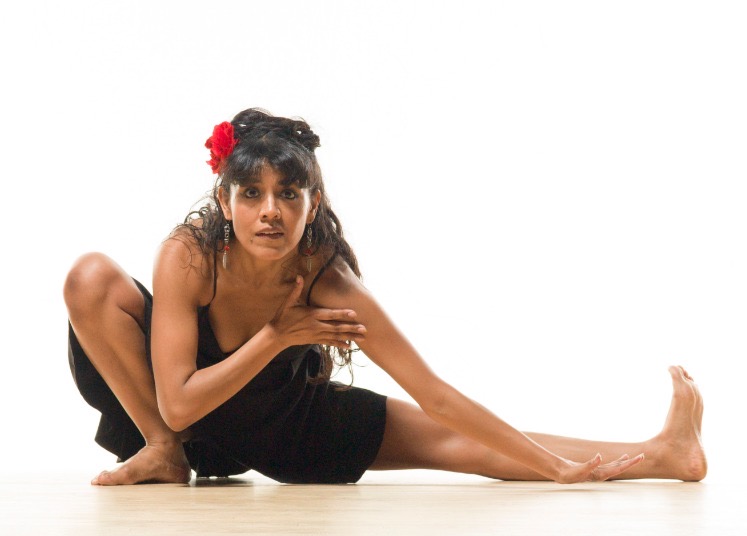
Puebla-born choreographer Silvita Díaz Brown was honored with one of the 2026 3Arts Awards, a distinction that celebrates artists whose work strengthens Chicago's cultural life; this year, her work also reached the public with Ellas y Yo: Mexicanas, a piece about the memories and experiences of Mexican women.
Díaz Brown received the Reva and David Logan Foundation Award, one of this year's ten 3Arts awards, which grants 30 thousand dollars unrestricted to support artistic work; the organization announced the awardees in September and honored them in October at Chicago's Harris Theater.
Born and raised in Puebla, Díaz Brown has lived in Chicago since 2008, where she founded and directs Sildance/AcroDanza, a dance and theater company that explores identity, migration, memory and the sense of belonging through movement and storytelling.
Her stage language combines contemporary dance, physical theater and acrobatics with text, original music and multimedia resources, a mix that allows stories to be told from the body and links personal experience with collective memory.
The artist studied dance at Universidad de las Américas Puebla and earned a master's degree in theater and movement at York University in Toronto; her training includes more than two decades of teaching yoga and movement in Mexico, Canada and the United States.
Throughout her career, her choreography has received support and presentation spaces from the National Museum of Mexican Art, the Chicago Cultural Center, Links Hall and Chicago Dancemakers Forum, among other institutions and arts organizations.
Ellas y Yo: Mexicanas, her most ambitious work to date, was developed over four years and takes as its starting point the lives of Sor Juana Inés de la Cruz, Frida Kahlo and Díaz Brown herself, a Mexican migrant artist who lives and works in the United States.
The piece traces the different ways these women sought creative freedom in the face of colonial, religious and patriarchal restrictions; in the segment dedicated to Sor Juana, the nun's habit appears as a garment that limited her life and, at the same time, allowed her to write.
In the section inspired by Frida Kahlo, the work explores how the painter turned pain into a form of expression, while Díaz Brown's autobiographical stretch addresses migration, grief and belonging.
Six dancers bring the triptych to life through solos, duets and ensemble scenes, with contemporary dance, physical theater, text in Spanish and English, original music and projections; the performance lasts one hour and is recommended for ages 14 and up.
The work premiered in Chicago from October 2 to 4 as part of the Destinos festival, in collaboration with Pivot Arts and the Physical Theater Festival's Made in Chicago program; days later it had its first international presentation at the FITOV festival in Argentina.
Across her body of work, Díaz Brown returns to themes such as motherhood, resilience and transmission between generations, and uses art to explore how history and culture participate in the construction of identity.
More from Culture
All stories →
Mexican Foreign Service accepts Indigenous languages for the first time to strengthen consular services in the United States
The Ministry of Foreign Affairs (SRE) opened the Mexican Foreign Service entrance competition for the first time to those who speak an Indigenous language, in order to strengthen support for Mexican nationals in the United States, where close to 40 million people of Mexican origin live, according to the EFE news agency.

"A feminine ritual": Pollen confronts grief at WOMB Mexico
The work of Erawa and Joui is seed and womb of powerful artistic experiences
From Corn to the Hearth: 16 Years of Mexican Cuisine as Intangible Cultural Heritage of Humanity
On November 16, 2010, UNESCO inscribed traditional Mexican cuisine on its Representative List of the Intangible Cultural Heritage of Humanity. The distinction recognized a living culture that begins in the…