Indigenous children's voices unite in Mexico City's Zócalo under one call: save the fire
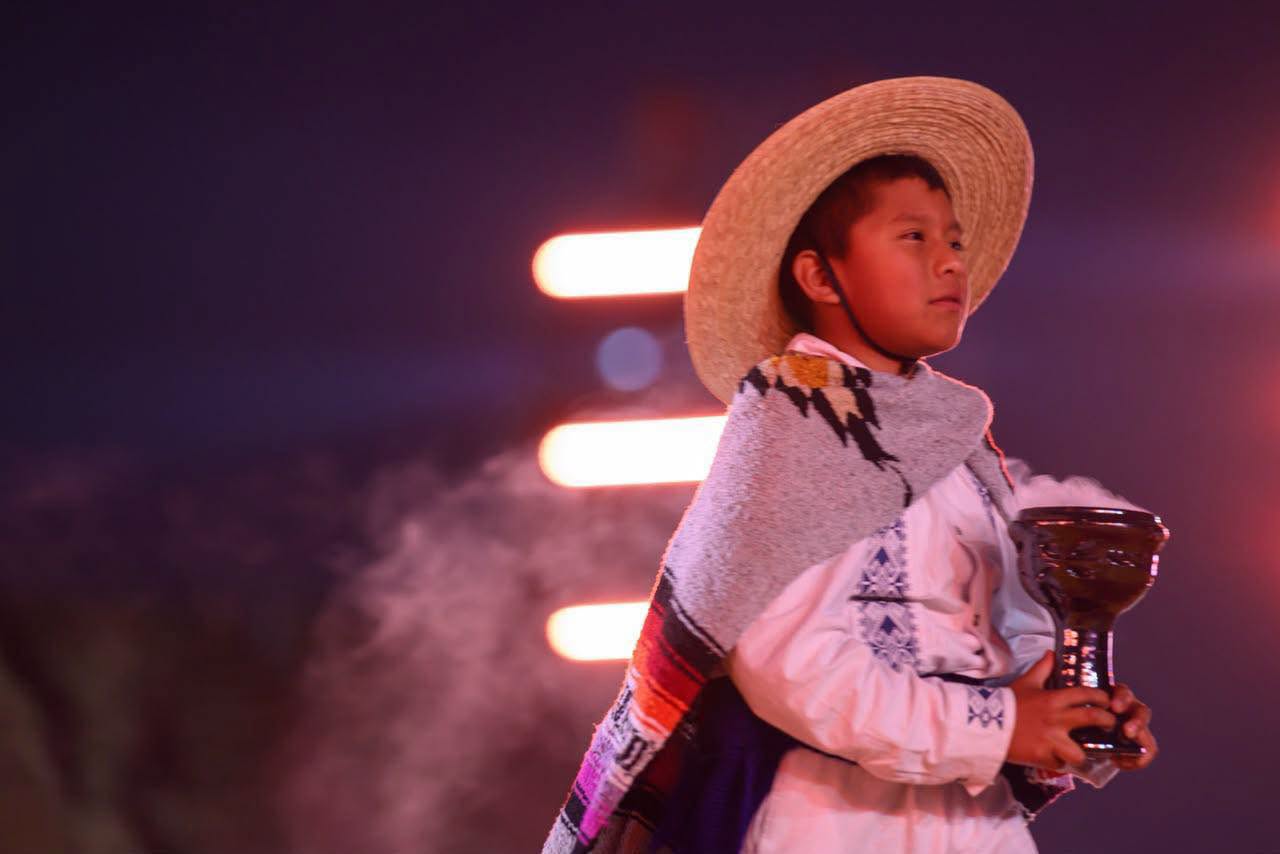
With the monumental catrina as witness, on the night of November 7, the capital's Zócalo became the meeting point for hundreds of children's voices, where music and memory played a narrative role in showing that Mexico's native cultures remain alive through their stories.
"¡Fuego!" the children shouted in different indigenous languages; the words echoed in the heart of the city, the audience held its breath; that night the Zócalo plaza became a great "quincunce," a raised circular stage from which four arms extended to symbolize the four cardinal points.
"A lightning bolt struck the milpa, the oldest corn caught fire and the rain did not put it out. A wise grandmother took a grain of this corn and carried it to her house, blew on it carefully and fed it dry leaves, and so the fire was born."
With this narration began the second edition of the community cultures fair "Voces vivas, salvando al fuego."
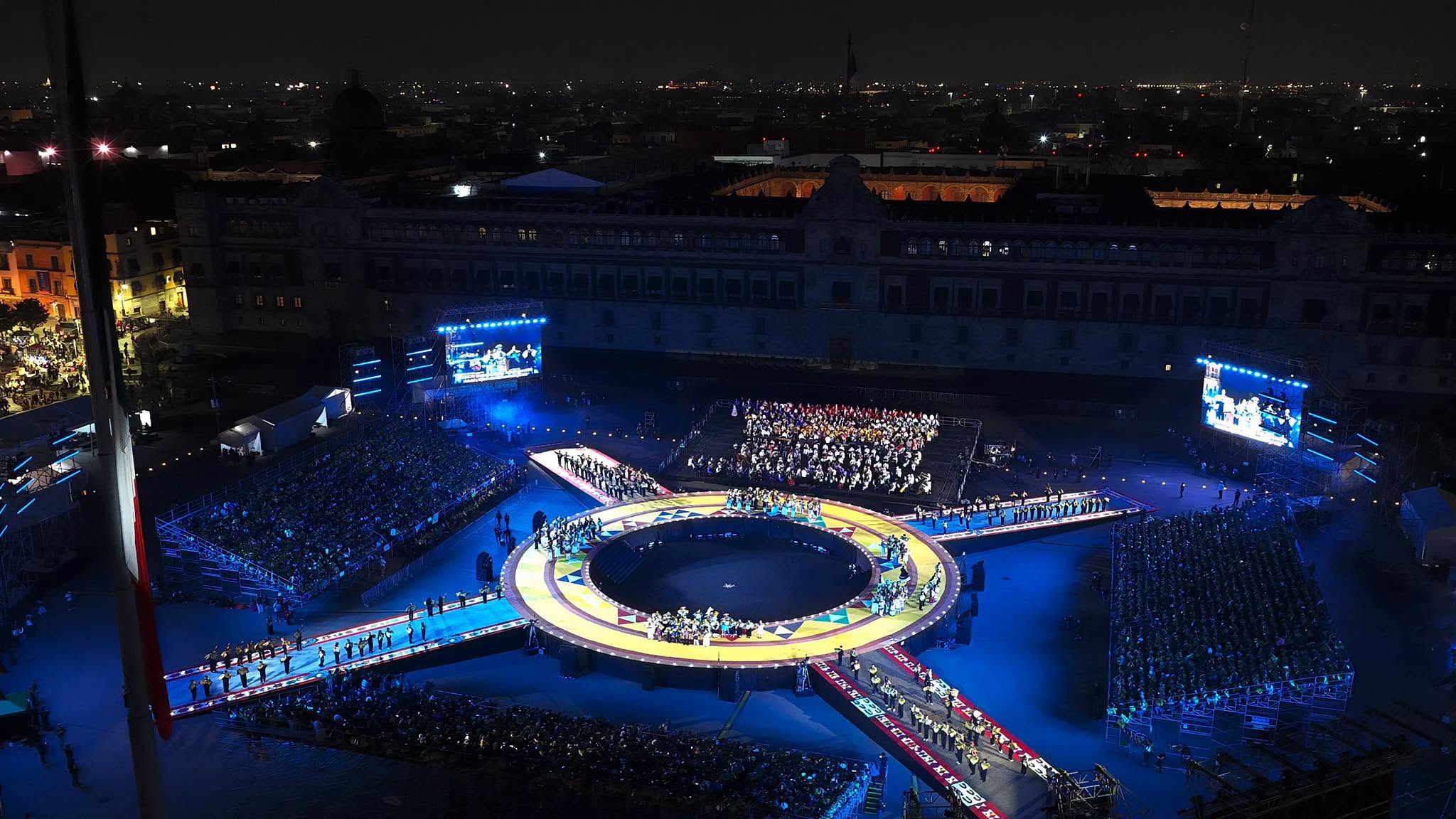
The celebration, organized by the Secretaría de Cultura del Gobierno de México through the Dirección General de Vinculación Cultural and the Sistema Nacional de Fomento Musical (SNFM), presented the Mesoamerican legend of the tlacuache and the fire, and also wove in stories created by children from the casas y comedores de la niñez indígena of the Instituto Nacional de los Pueblos Indígenas (INPI), adapted for the stage by the poet Mardonio Carballo.
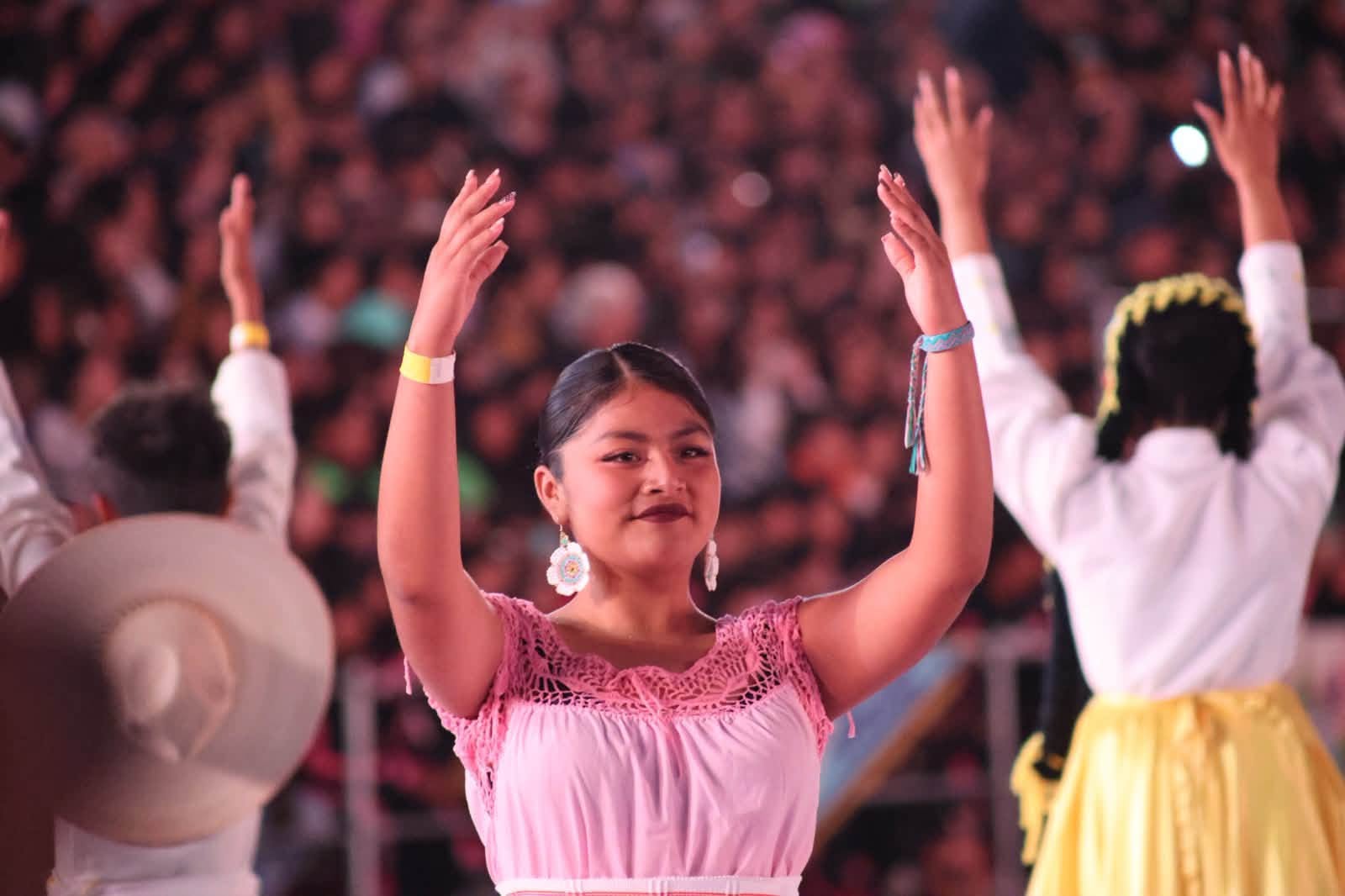
The staging brought together nearly 800 indigenous girls and boys from 28 states across the country and members of 183 Semilleros Creativos, who turned the Zócalo into a stage where diversity took center stage. Under the stage direction of Jesusa Rodríguez, the children wove a cultural mosaic that highlighted the richness of Mexico's native peoples through their dances, songs and worldviews.
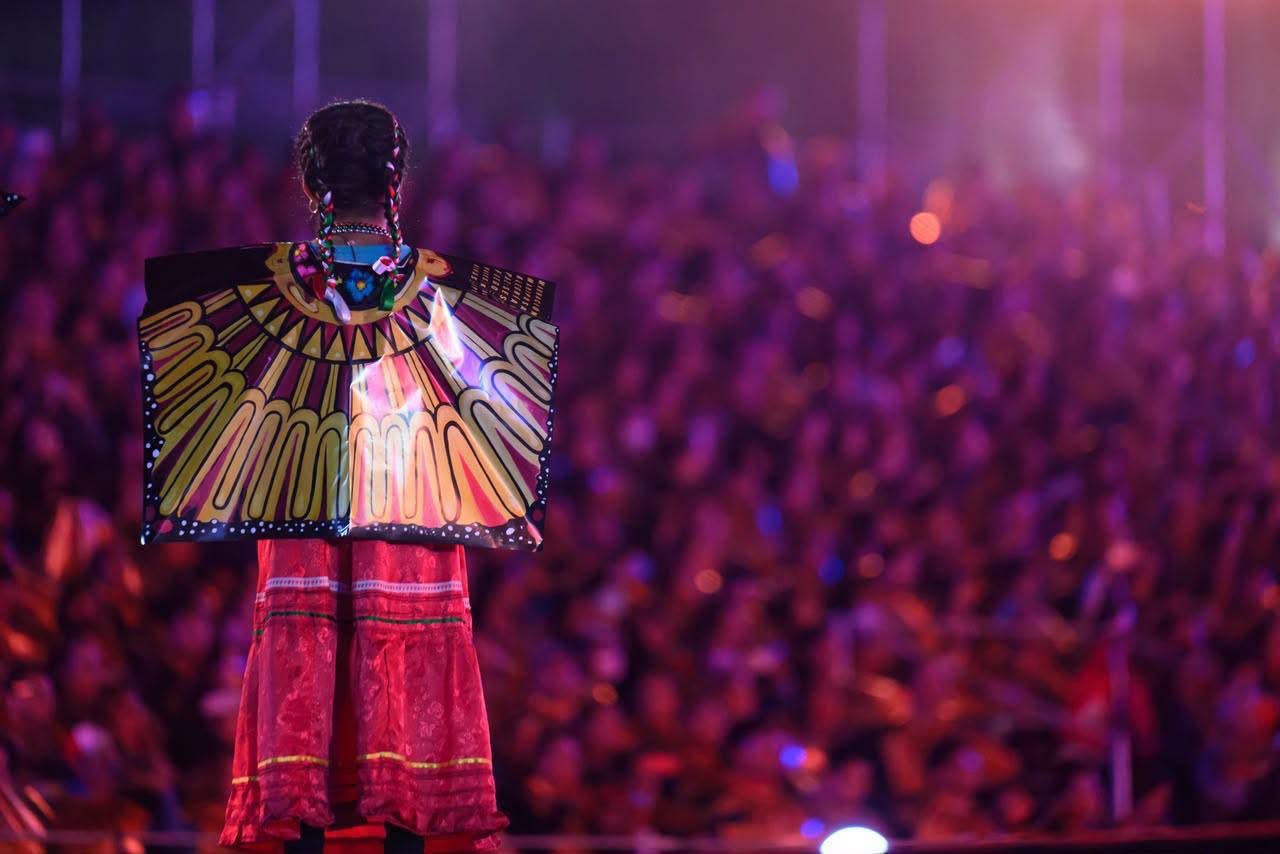
Music was one of the threads running through the celebration.
Under the direction of Roberto Rentería, head of the Sistema Nacional de Fomento Musical, 170 girls and boys from the Orquesta de Música Tradicional Mexicana and 335 from the Coro Nacional Comunitario brought to life a repertoire that traveled through different regions and traditions of the country.
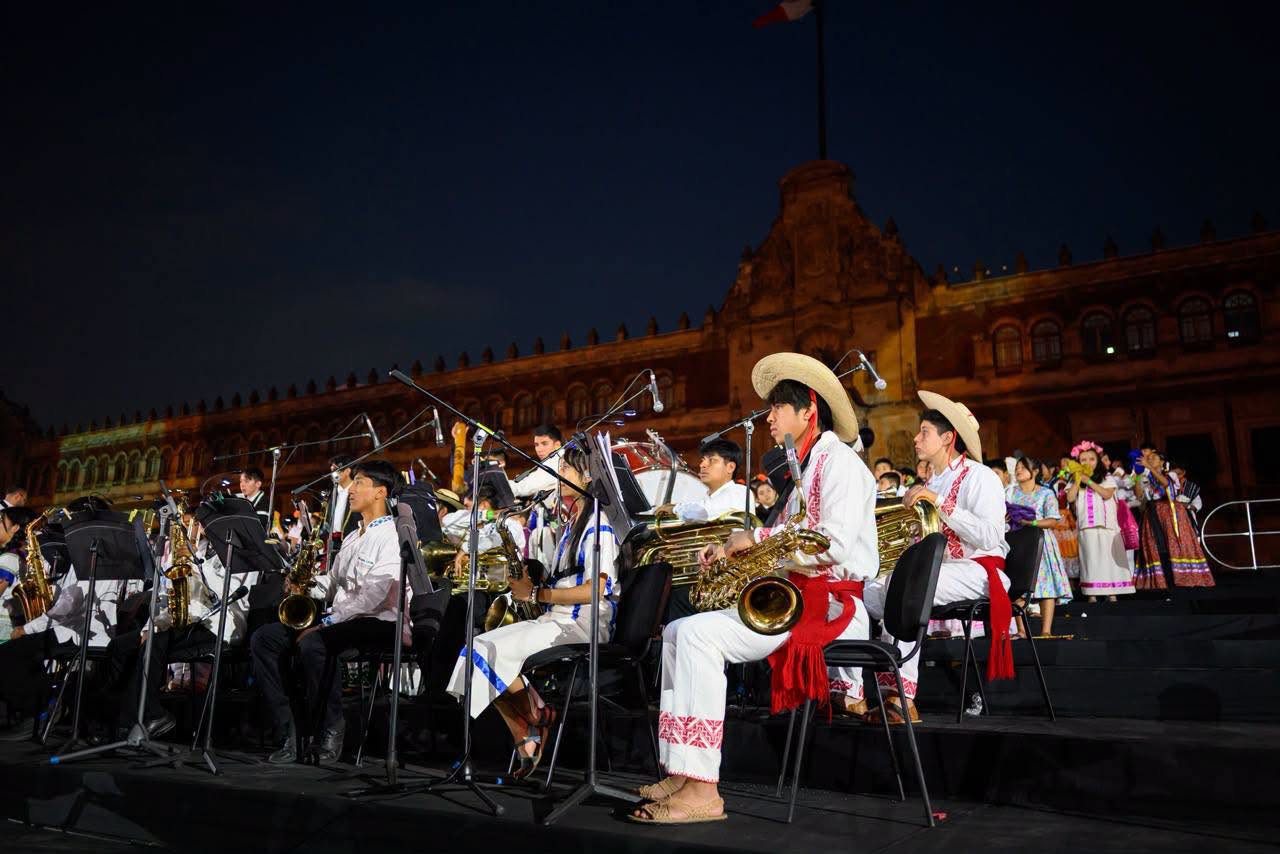
The repertoire was a journey through the musical memory of the peoples. The Purépecha sones abajeños La fuerza de las mujeres, by maestra Rocío Román Figueroa, and Arriba Pichátaro, by Daniel Plancarte Alexandre, shared the stage with the Maya lullaby Koonex koonex and the Huasteco son in the Totonac language Xanath (Flor).
The program also included Male Betulia (a pirekua in the Purépecha language), the Siquisirí (a traditional jarocho son with lyrics written by members of the Semillero Ensamble Jarocho Comunitario de San Andrés Tuxtla, Veracruz), the Huasteco son La culebrita, Guendanabani (La vida, a traditional song in the Zapotec language) and the Querreque, among others.
Rentería noted that every voice, language and scene in the production holds a collective memory that stays alive thanks to the communities that sustain it, and to the dreams and longings of their people.
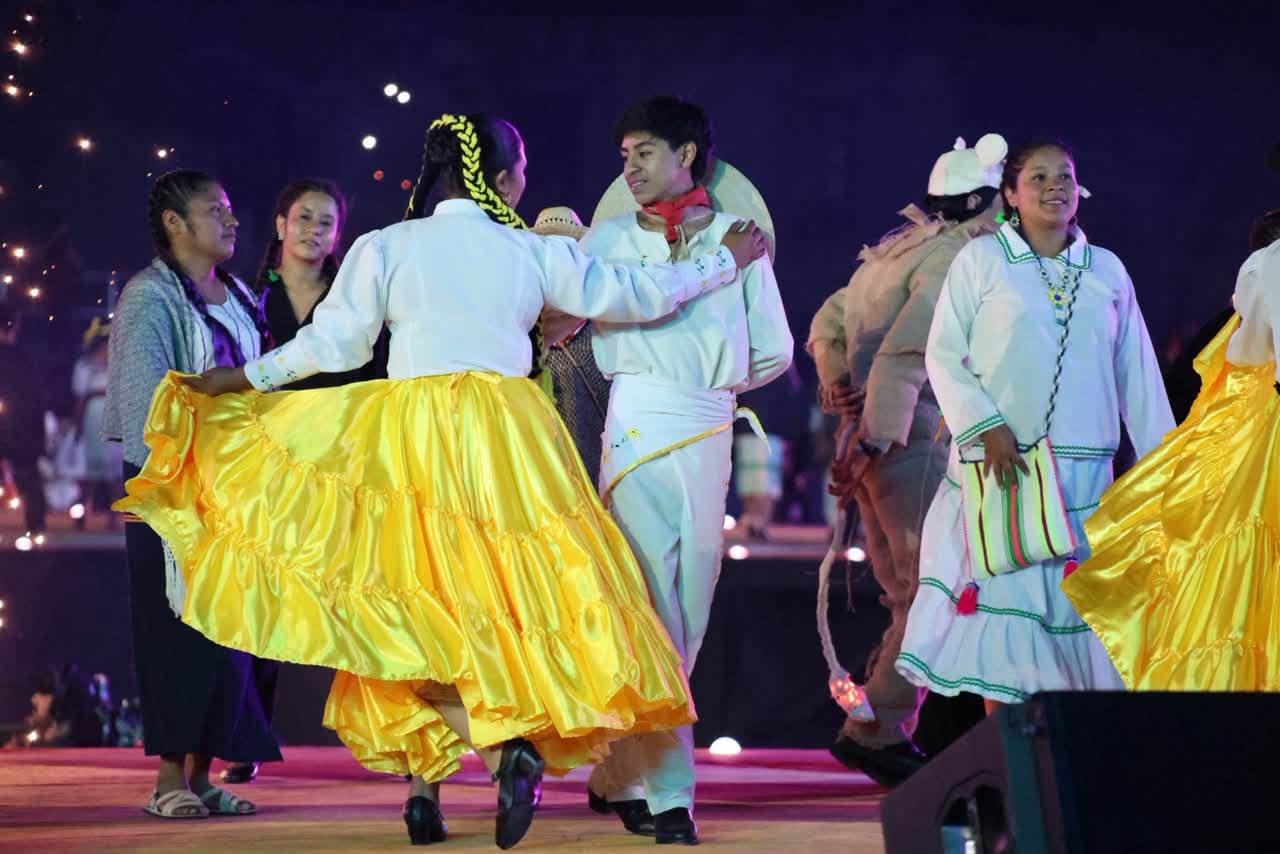
Voces vivas, salvando al fuego was an encounter between communities, languages and memories. In the voices of those girls and boys, ancestral stories found new ways of being told and reminded us that the fire of a culture does not go out as long as there are people willing to share it and spread it.
More from Culture
All stories →
Quintonil Puts Mexico Among the Global Elite as Fourth Best Restaurant in the World
Quintonil, in Mexico City, reached fourth place at The World's 50 Best Restaurants 2026 and received the recognition for Best Restaurant in Latin America, during a ceremony held this November 4...
Ancestral Games Built a Bridge Between Chiapas and Arctic Peoples
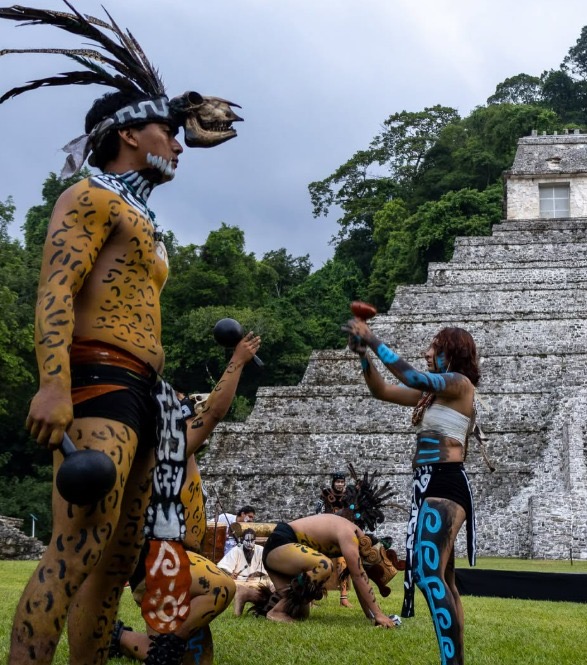
What began with a parade of 17 delegations in front of the Palenque Archaeological Zone ended as a national and international gathering that brought ancestral games to different venues across Chiapas and connected Mexican participants with representatives from Alaska, Canada and Greenland.

Mexico Investigates Social Media's Impact on Young People
Mexico's current political context demands rigorous study to understand how social media shapes the identity, ideology and political practice of new generations, said Maribel Reyes Calixto, a professor and researcher at the Universidad Autónoma de la Ciudad de México (UACM).